Vendor Rationalization: Modernizing a 150-Year-Old Data Model with Jim Chilton, CIO at Cengage
Jim shares stories about going from night-school student to five-time CIO, updating a 150 year-old data model, what technologies he thinks need to exist, and more.

Jim Chilton
Cengage CIO
Vendor Rationalization: Modernizing a 150-Year-Old Data Model with Jim Chilton, CIO at Cengage
Jim shares stories about going from night-school student to five-time CIO, updating a 150 year-old data model, what technologies he thinks need to exist, and more.
0:55 Jim’s personal investment in non-traditional learning
2:27 Apprenti and the value of mentorship
11:07 How many is too many vendors?
14:00 To rationalize, or not to rationalize?
21:22 Updating a 150 year old data model
24:02 What goes into a strong founding team?
26:18 What's the most needed technology?
“My advice to anybody in a startup, if they're doing it together, particularly when you have founders and co-founders, is to never, ever forget. That you being together as a team is the important part.”
Jim Chilton
Cengage CIO
Jim Chilton on Five CIO Stints, the 90-Day Playbook, Master Data Models, and Building Founding Teams That Last
Jim Chilton, CIO, Cengage (former CIO, Dassault Systemes) | Interviewed by Luke Alie of Atolio
Jim Chilton is the CIO at Cengage, a 150-year-old publisher turned 1.4 billion dollar education technology company. He has held CIO roles at five companies, including 16 years at Dassault Systemes. He talks about his personal 90-day playbook for entering new organizations, how he thinks about layered technology decisions and the danger of customizing ERP systems, why master data models matter more than most leaders realize, and what he has learned from watching startup teams flourish and fracture.
Why Cengage: From Publishing Heritage to EdTech Transformation
Luke Alie (LA): What drew you to Cengage?
Jim Chilton (JC): One of the reasons I joined was the transformation they were pursuing around learning. We are a company of learners built for learners. That mission resonated with me personally. I was a nontraditional student myself. I worked full-time and attended class from 5 to 10pm three days a week for four and a half years just to get my bachelor's degree. When I look at students across this country trying to carry a full-time job and get educated at the same time, I have enormous respect and admiration for them. Being part of supporting that experience gets me excited to show up every day.
Apprenticeships and Mentorship Programs: Building Teams That Reflect the Community
LA: You're also involved in mentorship and apprenticeship work. Why?
JC: At Dassault Systemes I created an internship program with the University of North Carolina where we brought in students from their gaming and computer science programs to help develop mobile applications. The students got great experience and we got great work, faster and at lower cost than many of our external vendors.
At Cengage I signed us up early to be one of the first five companies to participate in Apprendi, a nationwide apprenticeship program. We've brought on 14 apprentices. Six have become full-time employees across software development, business analysis, and cybersecurity. Some of these people are former stay-at-home moms returning to the workforce. Some graduated from Boston College but couldn't find a way in. Some taught themselves to code but had no entry point. When I look at my organization, I believe it should reflect the community it serves. Programs like this help make that real.
The 90-Day Playbook: How a Five-Time CIO Enters a New Organization
LA: You're a five-time CIO. Have you developed your own 90-day playbook?
JC: I have used the same framework every time. The key is going in with a desire to understand the business in its totality, not just the technology. How does the company make its money? What is profitable, what is a growth business, what is sustaining, and where is the future? From there I look at whether the company has invested properly in the technology and resources needed to run the operation. And I meet with everybody. Not just the executive team. At Dassault Systemes, when I took on a team of 300-plus people across the globe, I had a one-on-one conversation with every single person. I didn't care if they worked the help desk or led CRM strategy. Everybody mattered. And those meetings revealed talent I never would have found otherwise, people in the wrong roles, people with extraordinary skills buried two levels deep.
One lesson I share with every executive team: the systems will outlast you. Whatever you implement today will likely be in this company for 10 to 20 years. Don't design technology around one person's strategy. I watched six and a half million dollars get spent on a CRM system over several years as three different CMOs each rebuilt it from scratch around their own approach. When the fourth arrived, I told the executive team: let's start using this software the way it was designed, which reflects thousands of companies' best practices, and then align it to our strategy from there. That worked.
Layered Technology Decisions: Core, Periphery, and Experimentation
LA: At Cengage you have over 560 technologies in use. How do you make decisions about what to consolidate?
JC: I think about technology in three layers. The first is the non-negotiable core: ERP, revenue recognition, compliance, governance, the master data model of how the company operates. That cannot be negotiated. The second layer connects the core to everything else: marketing systems, image management, performance measurement. Those require close partnership between IT and the business. The third layer is where experimentation belongs. This is where the business should be able to say yes, go explore that technology, keep it in a defined box, and we'll decide together if it belongs in the next layer.
Where companies get into trouble is when functional leaders make decisions in the second or first layer without understanding the integration burden they are creating. The system works for two years, the person who bought it leaves, nobody knows how to maintain it, and the burden falls on IT. Then I am trying to support something built on your doorstep by someone who is no longer there. That is a common and expensive problem.
Master Data Models: The Unsexy Foundation That Shapes Everything
LA: You talked about master data models as being deeply important. Can you give an example?
JC: At Cengage, the traditional master data model for a 150-year-old publisher is organized around ISBNs: unique identifiers for books, organized by discipline. How did economics perform? How did calculus do? Everything maps to a book and a discipline. That made complete sense for the old business.
But when we launched Cengage Unlimited, a semester-long subscription to 22,600 titles, the ISBN and discipline model stops being meaningful. Now investors and the company want to know churn rate. How many students renewed in the second semester? Of the 22,600 books available, how many did they actually open? How do you pay authors based on page views? The business model completely transformed, and the master data model that underpinned it had to transform too. Too many leaders never ask whether the data model that runs their company actually matches the business they are trying to build.
Founding Teams: The One Thing That Predicts Long-Term Startup Success
LA: You have worked with 12 to 15 startups as advisor or investor. What have you learned about what makes a founding team successful?
JC: I have seen completely different approaches and completely different leaders both succeed. I am not sure there is a single secret formula. But I am certain of one thing: the teams that stick together through what they want to accomplish, not just through a specific product, are the ones that do extraordinary things. I have watched VCs and others pry teams apart in the name of creating a new financing round. My advice to any founder: never forget that being together as a team is the important part. What you generate will change. The money you make will change. But if you are never together again after this one, none of it matters. The ability to generate and execute ideas together is the value. Not what you can sell any particular idea for.
LA: Jim, thank you so much for coming on the show.
JC: Always a pleasure. Good luck. I've got high hopes for you guys.
Latest Episodes


Green Computing and Data Unlocking: Mentorship for Tech Leaders with Andrea Gallego, Global CTO at BCG GAMMA
Andrea Gallego (Global CTO at BCG GAMMA) has taken her career from large financial institutions, to rapidly growing NGOs, and ultimately to this intersection of consulting and tech. Listen in to hear her thoughts on the value of mentorships between women, how she became interested in startup culture, possible new ways to leverage information at consulting groups, and more.
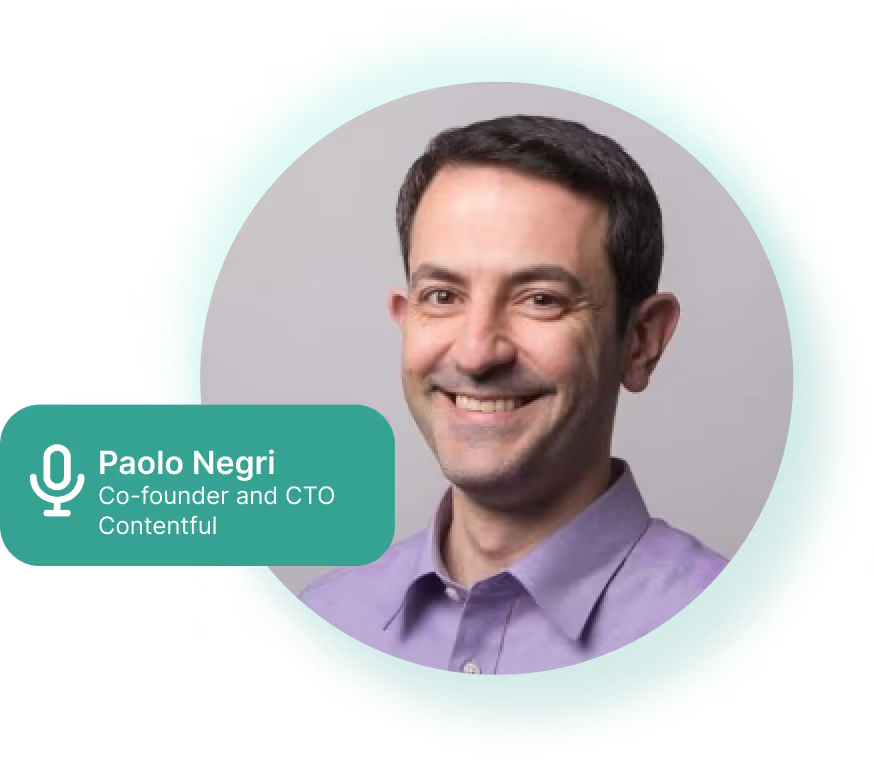
Internal Knowledge Management: Experimentation While Scaling with Paolo Negri, Co-founder at Contentful
Paolo walks us through his early career at startups across Europe, how he built a company solving a problem he faced at those very startups, why he encourages a culture based on experimentation at Contentful, and much more.

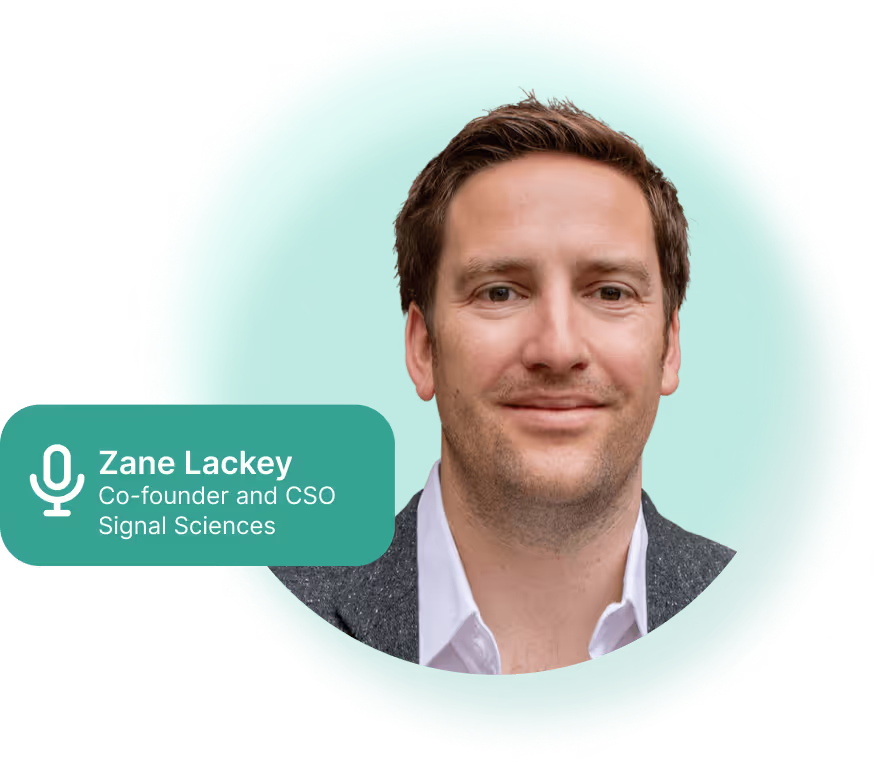
Securing Digital Transformation: Practical Lessons from Signal Sciences with Zane Lackey, Co-founder at Signal Sciences
Zane is a Co-founder and Chief Security Officer at Signal Sciences, a web-application security company acquired by Fastly. Zane shares what his career has taught him about security, founding teams, and what the future holds for digital transformations.
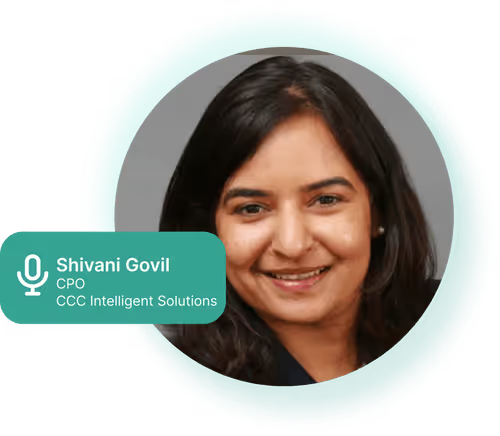
Innovation Culture: Enterprise vs. Startup Technology Scaling with Shivani Govil, CPO at CCC Intelligent Solutions
Innovation has been a central focus in Shivani Govil's career, including during her time at Silicon Valley Startups, SAP, and in her current role as Chief Product Officer at CCC Intelligent Solutions, a modern insurance solutions company. We dove into how she thinks innovation works at different scales, business units, industries, and more.
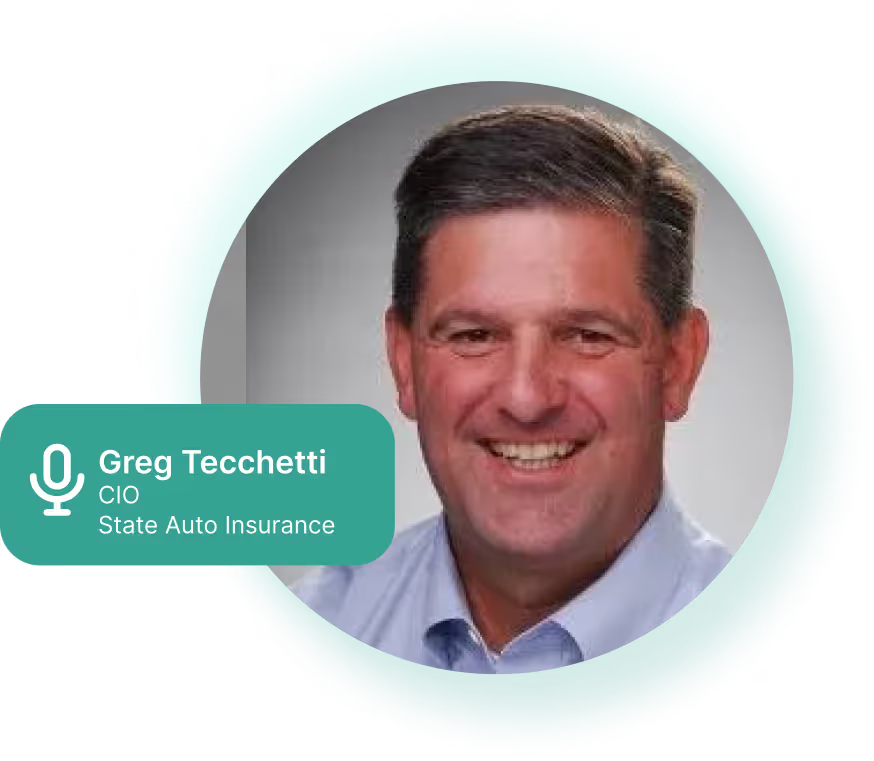
Startup to Enterprise Ops: Lessons for Serial Entrepreneurs with Greg Tacchetti, CIO at State Auto Insurance
Atolio's co-founder Mark Matta interviews Greg Tacchetti, CIO at State Auto Insurance. Greg shares his story, what he learned from his previous experience as a co-founder, which tech he's most excited about these days, and more.

SaaS Sprawl and Transparency: Scaling Internal Employee Directories with Alex Solomon, CTO and Co-founder at PagerDuty
Alex Solomon (CTO & Co-founder at PagerDuty) joins us to talk about the early days at PD and some critical decisions about transparency, documentation, employee experience, and more.

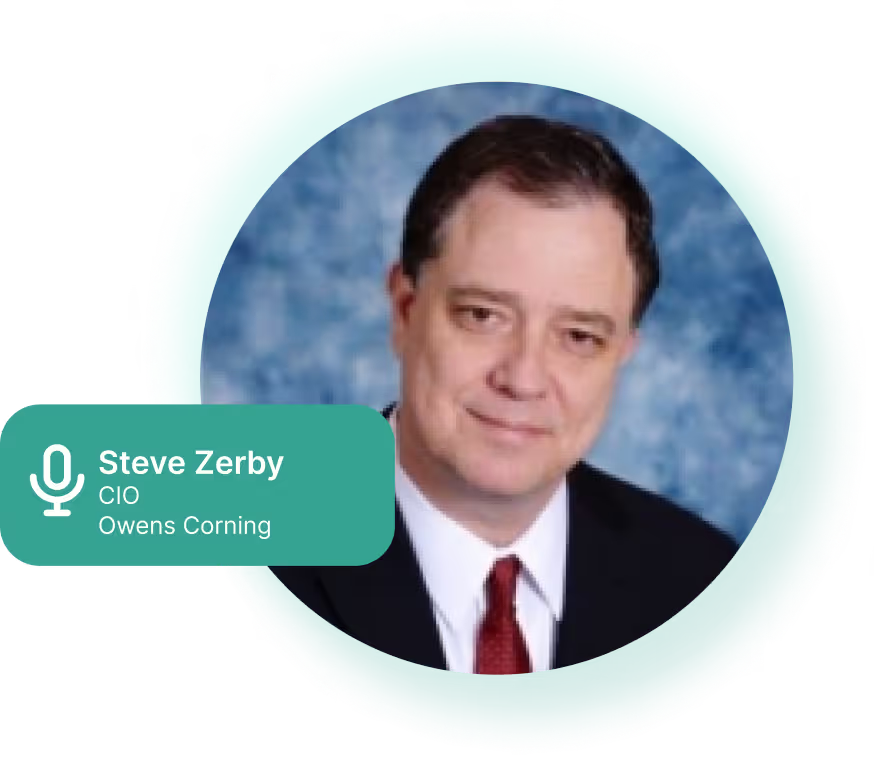
Engineering Transparency: Building a Culture of Urgency (Without Panic) with Steve Zerby, CIO at Owens Corning
Fortune 500 CIO Steve Zerby talks with us about the culture of urgency that he is helping foster at Owens Corning and how it relates to ego, transparency, service, and more.


Purposeful Innovation: Avoiding Single-Vendor Lock-in Risk with Andrew Campbell, CIO at Terex Corporation
Andrew talks with us about a number of topics, including the concept of purposeful innovation at Terex, the drawbacks to single-vendor environments, his reasons for being a servant leader, and more.
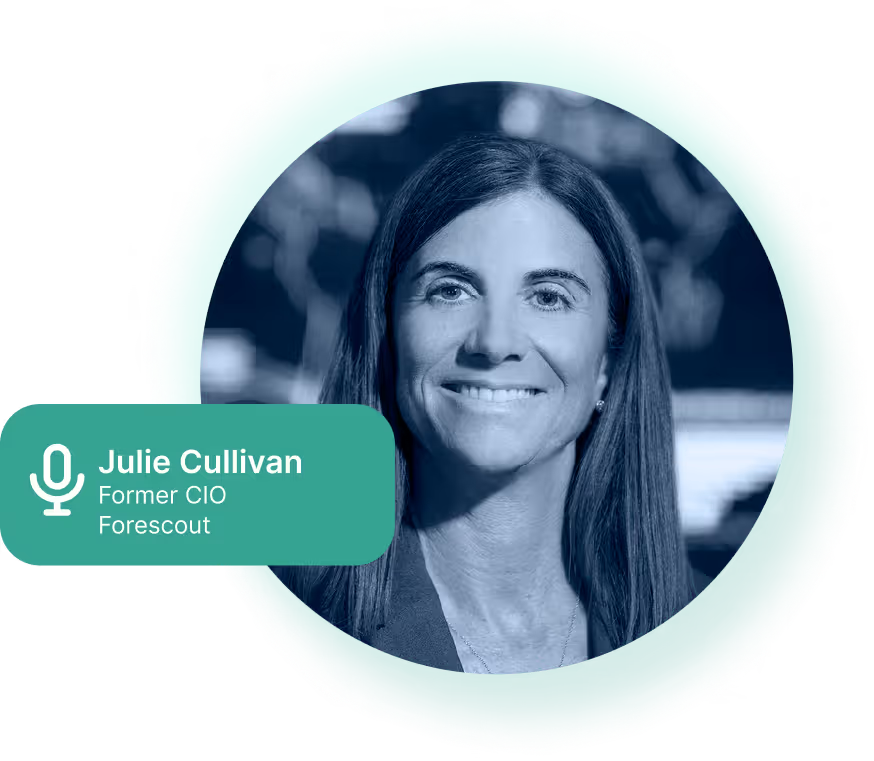
CIO Leadership Advice: Lessons from Sales and Go-to-Market with Julie Cullivan, Former Forescout CIO
Julie (Board Director at Axon, HeartFlow, and AaDya) joins us to share how she handled leading both technology & people at Forescout, why she took the leap to become a first-time CIO at FireEye, what she learned from her go-to-market roles at McAfee & Autodesk, and more.
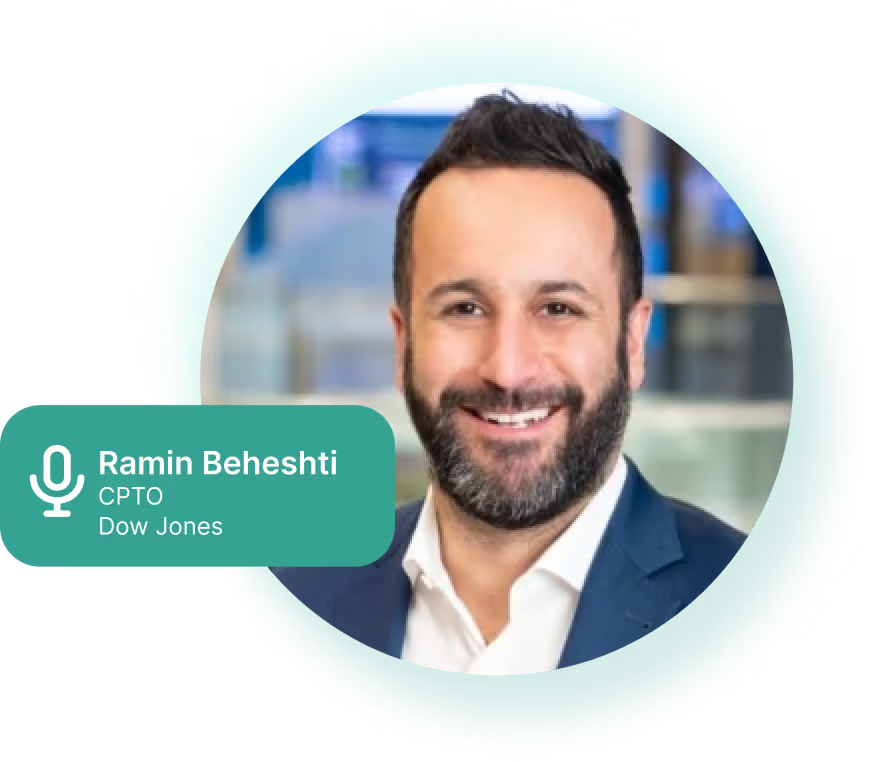
CIO to CPTO Transition: Shaping Product Culture and Curiosity with Ramin Beheshti, CPTO at Dow Jones
Ramin is the Chief Product & Technology Officer at Dow Jones, publisher of The Wall Street Journal, Barrons, Marketwatch, and more. He talks leadership lessons, the value of curiosity, his approach to working with startups, and more.
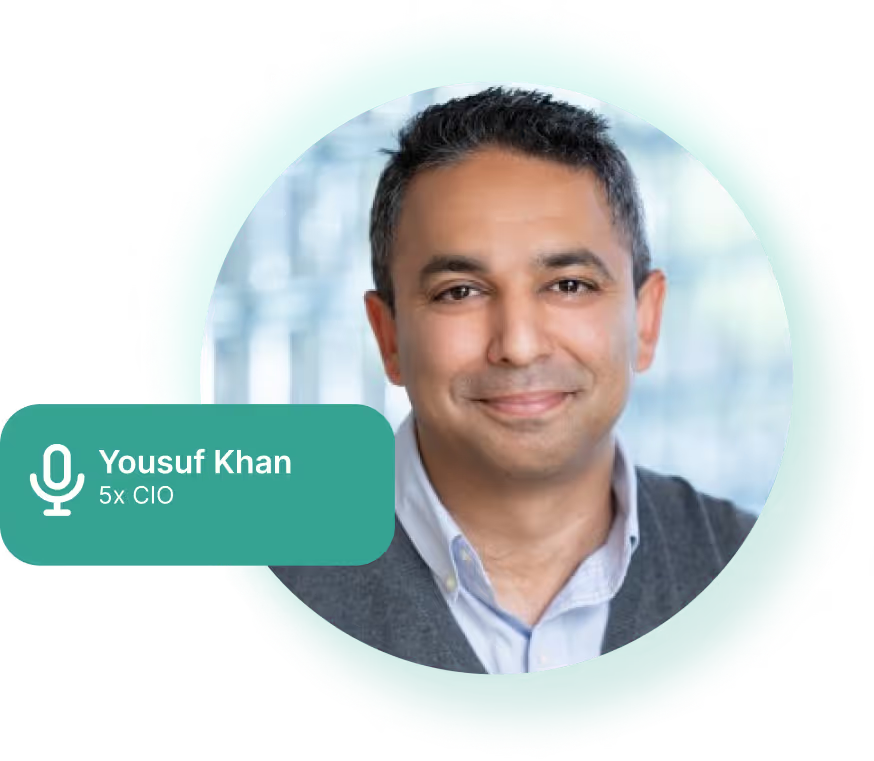
CIO to VC: Evaluating Startup Tech and Early-Stage Bets with Yousuf Khan, Former 5x CIO
Our first guest is Yousuf Khan, who discusses what he learned on his journey from accidental CIO at companies like Automation Anywhere, Moveworks, and Pure Storage to unconventional VC at Ridge Ventures.