CIO to VC: Evaluating Startup Tech and Early-Stage Bets with Yousuf Khan, Former 5x CIO
Our first guest is Yousuf Khan, who discusses what he learned on his journey from accidental CIO at companies like Automation Anywhere, Moveworks, and Pure Storage to unconventional VC at Ridge Ventures.

Yousuf Khan
former 5x CIO
CIO to VC: Evaluating Startup Tech and Early-Stage Bets with Yousuf Khan, Former 5x CIO
Our first guest is Yousuf Khan, who discusses what he learned on his journey from accidental CIO at companies like Automation Anywhere, Moveworks, and Pure Storage to unconventional VC at Ridge Ventures.
2:22 Seeing where ideas are born
4:03 Would you have hired your younger self?
7:10 The value of candid conversations
9:10 Good vs. Bad relationships with startups
12:17 Working with companies like Slack, Smartsheet, & Oomnitza
14:33 How do you decide which startups to bet on?
“I recognize that company building is tremendously hard, and if I could play a part in that, I would be honored to do so.”
Yousuf Khan
former 5x CIO
Yousuf Khan on Going from Five-Time CIO to VC Partner, the CIO Group Therapy Dinners, and How to Build Honest Startup Partnerships
Yousuf Khan, Partner, Ridge Ventures (former CIO, Automation Anywhere / Moveworks / Pure Storage) | Interviewed by Luke Alie of Atolio
Yousuf Khan served as the first CIO at five different companies before becoming a partner at Ridge Ventures, an early-stage VC firm. In this episode, he talks about why his operator experience gives him a unique lens as an investor, how the CIO Group Therapy Dinners he organized starting in 2014 modeled what candid feedback actually looks like, and what separates a good startup partnership from a transactional vendor relationship.
From Five-Time CIO to VC: The Unconventional Journey to Ridge Ventures
Luke Alie (LA): You were the first CIO at five different companies. How does that background inform your perspective as a VC?
Yousuf Khan (YK): I have bought hundreds of solutions. That's just what I did as an operator. I have worked across infrastructure, big data, business applications, cybersecurity, AI. I'm a monumental nerd. That experience gives me a very specific vantage point when I look at early-stage teams. I can see where I believe there is value, where I see room for improvement, and where I've personally felt the pain of a problem that a company is trying to solve.
And I've always worked closely with the startup community. I advised hundreds of companies informally, a few formally. I recognize that company building is genuinely hard. If I can play a part in that journey in a meaningful way, I consider that an honor.
Earlier in my career, I actually applied to VC firms and was turned away. The European venture industry at the time was very early, the funds were fewer, and the thesis-driven investing was narrow. Looking back, I would have hired myself. I was hungry, enthusiastic, and passionate. But I needed the operating experience to understand not just that I wanted to be in venture, but what I actually want to do in venture. That journey took a while and I have no regrets about it.
CIO Group Therapy Sessions: What Candid Feedback Actually Looks Like
LA: You've spoken about the CIO Group Therapy Dinners you organized. What made that format so effective for candid conversation?
YK: Transparency equals efficiency. If you can say exactly where things are, you don't have to navigate around the conversation. The dinners worked because of three things. First, focused conversation about problems rather than presentations. Second, people were honest about what they actually needed. And third, founders would come in and the CIOs would give them direct, useful feedback: not polite hedging but real perspective, including telling them why they would never buy their product.
The community was collegial, with a sense of camaraderie. The objective was to be directly helpful, not critical for its own sake. That kind of feedback is essential for early-stage founders because it surfaces problems on the leadership side, the messaging side, or the product side that they need to address before they are out in front of enterprise buyers.
Good Partnerships vs. Bad Ones: A Lightning Round
LA: What separates a good startup relationship from a bad one, from a CIO's perspective?
YK: Good relationship: partnership. Bad relationship: selling. Good relationship: transparency. Bad relationship: selling. Good relationship: regular progress updates. Bad relationship: when's the renewal? Good relationship: honest roadmap visibility and the reasoning behind it. Bad relationship: we think this is a good idea.
Fundamentally it comes down to partnership. CIOs are taking a bet on a company because they believe in its vision. Define what success looks like clearly and early. Provide regular honest updates on what is working and what is not. Appreciate that a design customer relationship requires real time and effort from the buyer's side, not just the vendor's side. And recognize that a good design customer relationship is worth more than a transactional sale. A reference customer who will speak publicly, talk to investors, or refer peers is the ultimate outcome of a good partnership.
Founding Design Partnerships: Moveworks, Slack, Smartsheet, and the Pattern Behind Them
LA: Can you talk about a successful partnership you had with a startup?
YK: I was a founding customer of Moveworks, which built an AI platform for resolving IT support tickets. The product was phenomenal. I was an early customer of Slack in 2015 on a multi-year deal when the product was still clearly young but growing fast. Smartsheet I saw very early and have been a customer five times over. What ties these together is that in each case I gave direct feedback, and the founders acted on it. That is what drives good results on both sides.
How Operator Experience Informs Investment Decisions at Ridge
LA: How does your operating background now inform what startups you bet on?
YK: As a VC I look at what operators need. I have bought hundreds of solutions, so I have a very grounded sense of what problems are real and which ones are nice-to-have. Beyond that, I look at where clusters of problems are forming in the market and where solutions are beginning to coalesce around those clusters. Data security, DevOps tooling, and open source are areas I watch closely.
Then the investable lens: is this a strong team? Is this a big enough market? Have they demonstrated real product-market fit? The operator background and the VC lens complement each other. My advice to any CIO or CTO: work with VCs and with the startup ecosystem as much as possible. That is genuinely how you innovate at scale. And I encourage anyone to reach out. I actively encourage CIOs to partner with startups.
LA: Yousuf, thank you so much for being on this inaugural episode.
YK: Thank you very much. I'm the accidental CIO and the unconventional VC. We will see how this works out.
Latest Episodes
Green Computing and Data Unlocking: Mentorship for Tech Leaders with Andrea Gallego, Global CTO at BCG GAMMA
Andrea Gallego (Global CTO at BCG GAMMA) has taken her career from large financial institutions, to rapidly growing NGOs, and ultimately to this intersection of consulting and tech. Listen in to hear her thoughts on the value of mentorships between women, how she became interested in startup culture, possible new ways to leverage information at consulting groups, and more.
Internal Knowledge Management: Experimentation While Scaling with Paolo Negri, Co-founder at Contentful
Paolo walks us through his early career at startups across Europe, how he built a company solving a problem he faced at those very startups, why he encourages a culture based on experimentation at Contentful, and much more.
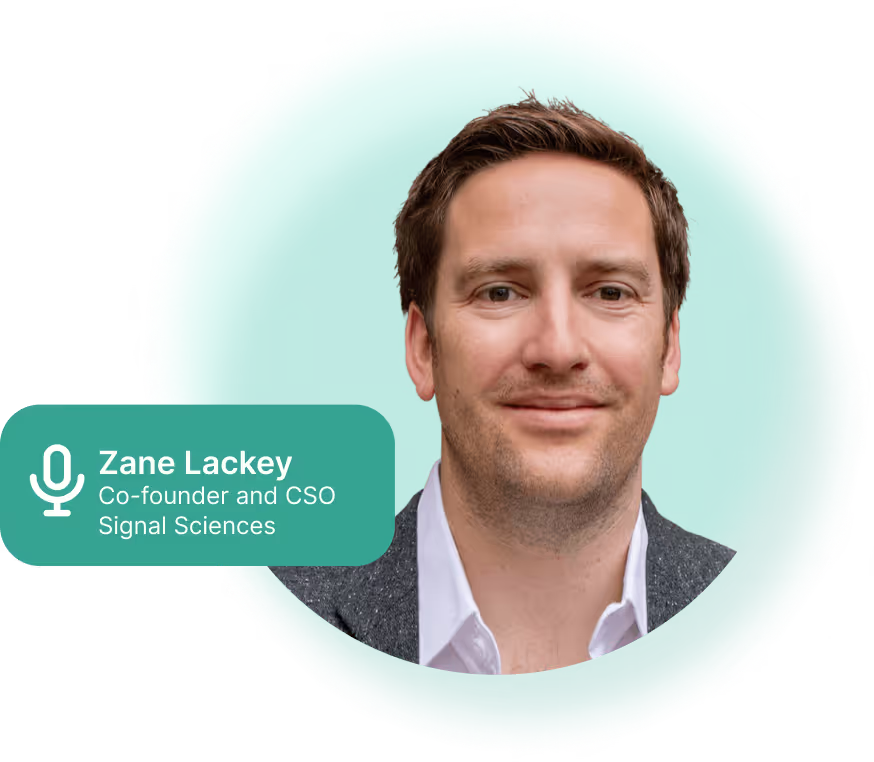
Securing Digital Transformation: Practical Lessons from Signal Sciences with Zane Lackey, Co-founder at Signal Sciences
Zane is a Co-founder and Chief Security Officer at Signal Sciences, a web-application security company acquired by Fastly. Zane shares what his career has taught him about security, founding teams, and what the future holds for digital transformations.
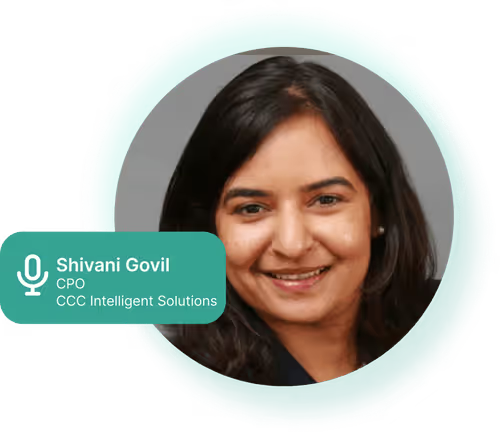
Innovation Culture: Enterprise vs. Startup Technology Scaling with Shivani Govil, CPO at CCC Intelligent Solutions
Innovation has been a central focus in Shivani Govil's career, including during her time at Silicon Valley Startups, SAP, and in her current role as Chief Product Officer at CCC Intelligent Solutions, a modern insurance solutions company. We dove into how she thinks innovation works at different scales, business units, industries, and more.
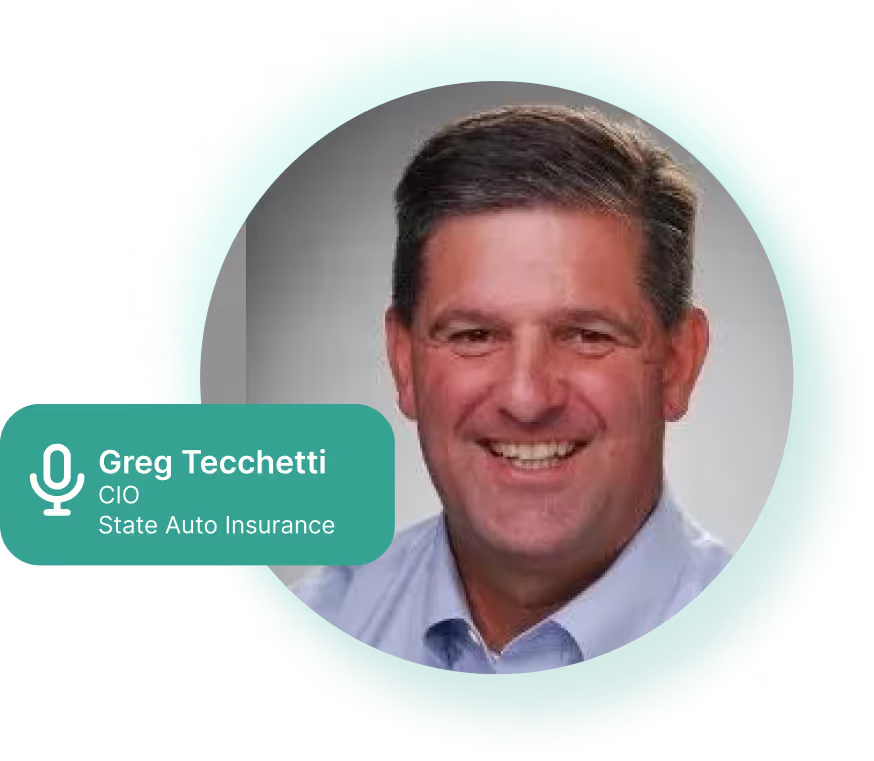
Startup to Enterprise Ops: Lessons for Serial Entrepreneurs with Greg Tacchetti, CIO at State Auto Insurance
Atolio's co-founder Mark Matta interviews Greg Tacchetti, CIO at State Auto Insurance. Greg shares his story, what he learned from his previous experience as a co-founder, which tech he's most excited about these days, and more.

SaaS Sprawl and Transparency: Scaling Internal Employee Directories with Alex Solomon, CTO and Co-founder at PagerDuty
Alex Solomon (CTO & Co-founder at PagerDuty) joins us to talk about the early days at PD and some critical decisions about transparency, documentation, employee experience, and more.
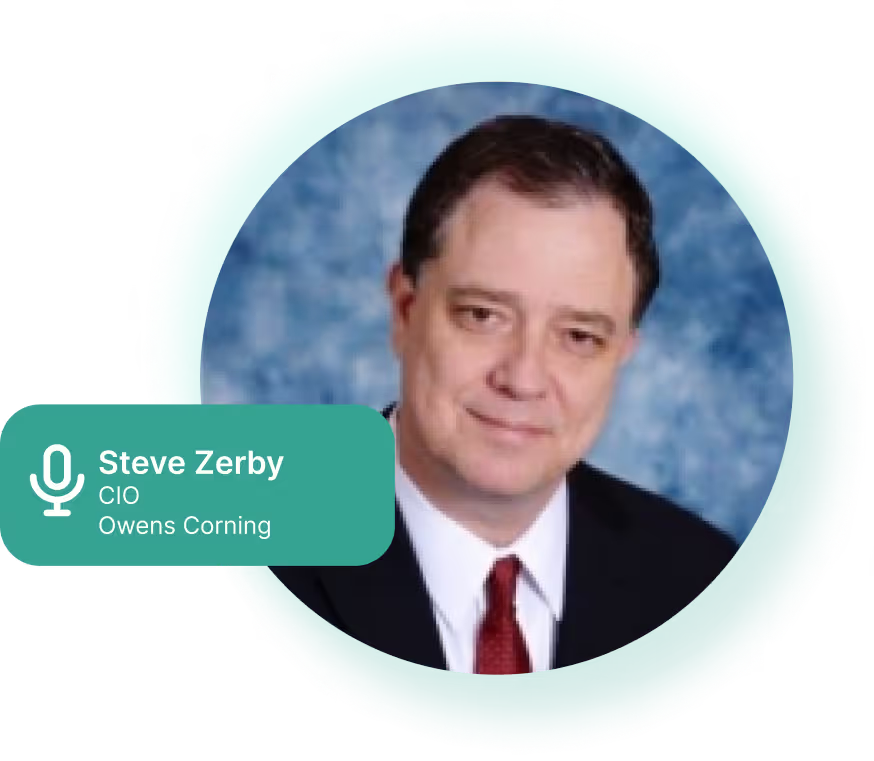
Engineering Transparency: Building a Culture of Urgency (Without Panic) with Steve Zerby, CIO at Owens Corning
Fortune 500 CIO Steve Zerby talks with us about the culture of urgency that he is helping foster at Owens Corning and how it relates to ego, transparency, service, and more.

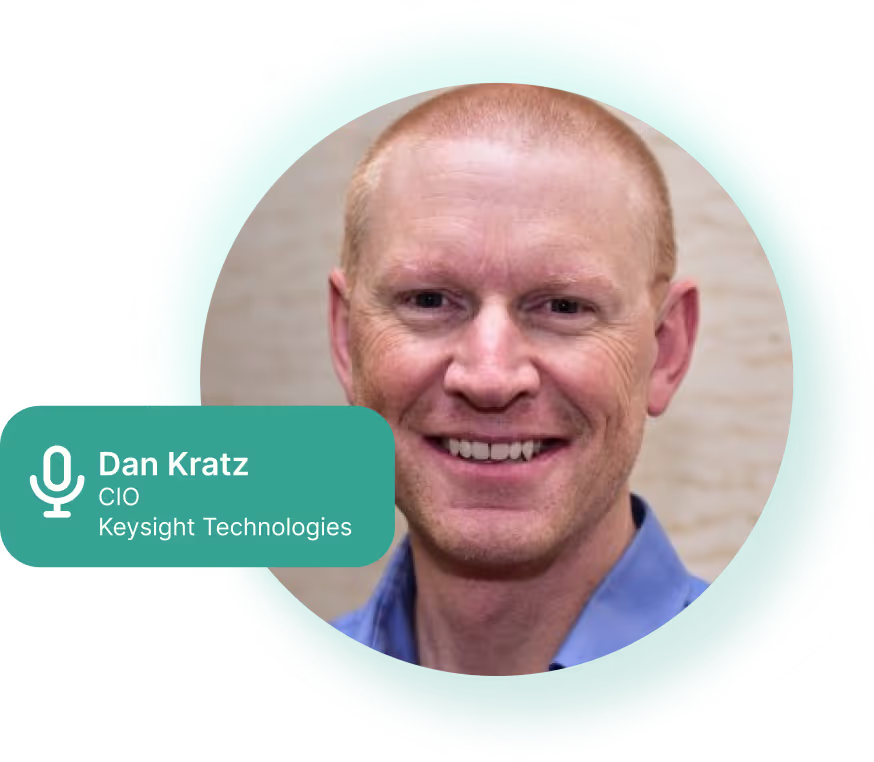

Purposeful Innovation: Avoiding Single-Vendor Lock-in Risk with Andrew Campbell, CIO at Terex Corporation
Andrew talks with us about a number of topics, including the concept of purposeful innovation at Terex, the drawbacks to single-vendor environments, his reasons for being a servant leader, and more.
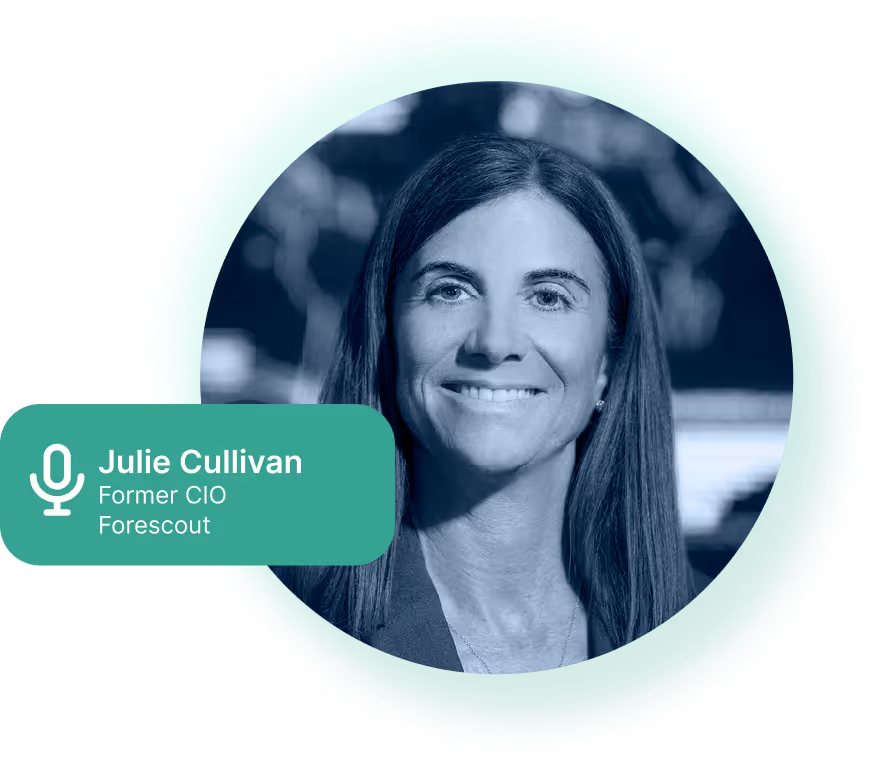
CIO Leadership Advice: Lessons from Sales and Go-to-Market with Julie Cullivan, Former Forescout CIO
Julie (Board Director at Axon, HeartFlow, and AaDya) joins us to share how she handled leading both technology & people at Forescout, why she took the leap to become a first-time CIO at FireEye, what she learned from her go-to-market roles at McAfee & Autodesk, and more.
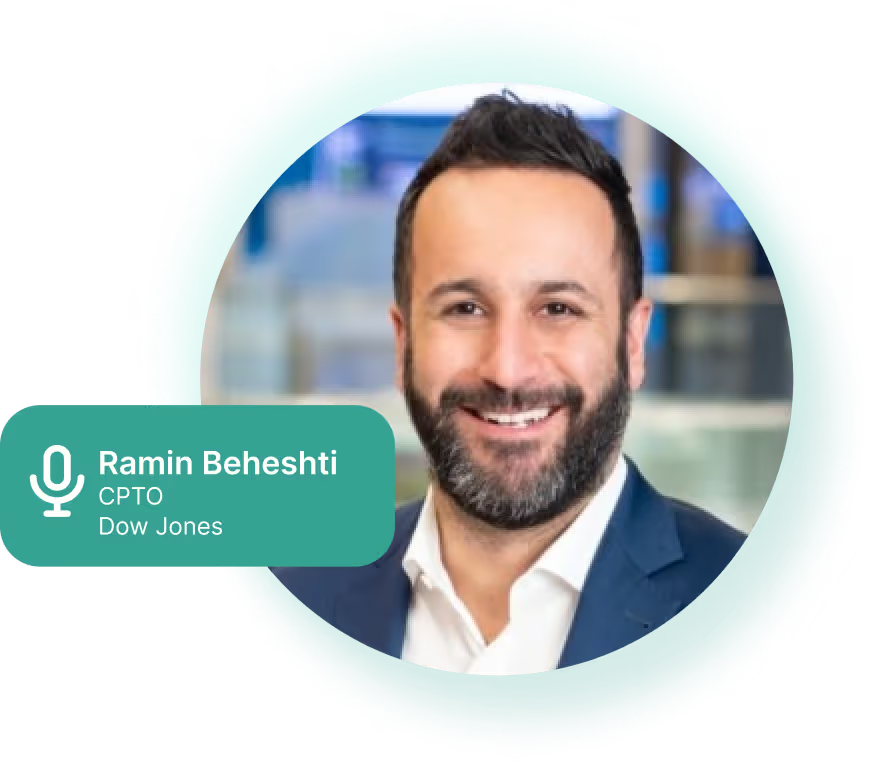
CIO to CPTO Transition: Shaping Product Culture and Curiosity with Ramin Beheshti, CPTO at Dow Jones
Ramin is the Chief Product & Technology Officer at Dow Jones, publisher of The Wall Street Journal, Barrons, Marketwatch, and more. He talks leadership lessons, the value of curiosity, his approach to working with startups, and more.