Engineering Management: Maintaining Intrinsic Motivation at Scale with Aaron Rankin, Co-founder at Sprout Social
Aaron shares an open and honest reflection on how growing up in humble circumstances shaped him into the person he is today.

Aaron Rankin
Sprout Social Co-founder and CTO
Engineering Management: Maintaining Intrinsic Motivation at Scale with Aaron Rankin, Co-founder at Sprout Social
Aaron shares an open and honest reflection on how growing up in humble circumstances shaped him into the person he is today.
9:26 Growing up & struggles with money
9:26 How Aaron’s childhood informs his parenting
13:18 First jobs & early drive to hustle
16:35 Falling in love with computers
25:34 Some influential professional figures
29:36 Changes in how he tells his own story
45:33 Finding intrinsic motivation as CTO
54:53 Becoming an investor
“I think that the story has always been the same, but I think that the way that I would have told it has changed over the years, and the reason for that is I think that just as I've gotten older, I've gotten a lot more comfortable with who I am.”
Aaron Rankin
Sprout Social Co-founder and CTO
Aaron Rankin on Growing Up Scrappy, Co-founding Sprout Social, and the Intrinsic Drive Behind a 14-Year Startup Journey
Aaron Rankin, Co-founder and CTO, Sprout Social | Interviewed by Luke Alie of Atolio
Aaron Rankin co-founded Sprout Social in 2009 and has served as its CTO ever since. In this episode, he traces his path from a working-class neighborhood outside Philadelphia, to teaching himself to code on a discarded IBM computer, to landing a web marketing job at 14, to eventually co-founding one of the most successful social media management platforms in the world. He talks about intrinsic versus extrinsic motivation, the shift from writing code to leading a company, and what he has learned from over a decade of building Sprout.
Growing Up Scrappy: Money, Self-Reliance, and an Old IBM Computer
Luke Alie (LA): Let's start by zooming out and talking about some of the more formative things in your life that made you who you are.
Aaron Rankin (AR): I go all the way back to my earliest memories. When I was five, my mother got married, which means that for the first five years of my life I was raised by a single mother. She was the first in her immediate family to go to college, got into University of Pennsylvania, and then, unfortunately for her and fortunately for me, she became pregnant and dropped out.
My family wasn't poor, but money was always tight and always the stress point. If my parents thought about anything, it was probably money. I had what I think was a pretty great childhood, but seeing struggle and wanting things I couldn't have from an early age made me develop a sense of self-reliance. If I wanted something, I was going to have to get it myself.
That's how I got into computing. What I really wanted was a Nintendo. I begged for it for years and my parents kept saying it was too expensive and would rot my brain. Eventually, my mom came home with a computer her office was throwing away. An IBM XT, which was basically considered the first PC ever. It had no graphics, booted from a five-and-a-quarter-inch floppy, and ran DOS 2.1. And despite all that, I just loved it. I spent two or three years playing around with it, and it became part of my identity.
At some point my mom bought us a proper modern computer, subscribed to AOL, and once I had the internet I found an HTML book at a bookstore and just started building websites. That's how, at 14, I applied for a web marketing job at a dot-com startup called Spree.com, which wanted to be what Amazon is today. I had no idea why they hired me, but they did.
From Paper Route to Programmer: Building a Career Before High School
LA: You also had a paper route, a convenience store job, and a web marketing role running simultaneously in high school. Was there a particular mentor or influence during that period?
AR: The biggest one was my cousin Andy. He was a professional programmer from San Diego who came east for a stint at Carnegie Mellon. Spending a weekend with him poured gas on the fire. He had a new car, a nicer apartment, and a great lifestyle. I remember one of my aunts asked him why he bought the fancy napkins, and he said: I studied hard so I could afford fancy napkins. That clicked for me. I love computers and this person who loves computers is living a great life. It became obvious that software engineering was what I wanted.
Andy introduced me to Carnegie Mellon, and I eventually got in. I was a good student but not a great one. I did the minimum to keep my mom off my back. But somehow I got accepted, and I owe so much to that experience. The rigor pushed me. The people I met there were ambitious and hardworking. I even ran a small freelance web development business on the side, earning 20 to 30 thousand dollars a year while paying down my loans.
From CMU, I got into IBM Extreme Blue, one of the most prestigious internships in the country at the time. The connections I made there led me to my first full-time job at IBM. I chose it because it paid the best. And within a year or two I realized that was a bad reason to make a choice. I was doing a highly technical role that involved no programming. I had wanted to be a software engineer. That experience forced me to examine intrinsic versus extrinsic motivation for the first time.
From Indico to Sprout Social: Finding the Zero-to-One Catalyst
LA: After IBM, you went to a Boston startup called Indeco, and it sounds like that reconnected you with your love of building. How did that lead to Sprout?
AR: Indeco brought me back to my roots. It was a fast-paced, intensely smart place with real founder culture. A lot of companies that have gone on to become unicorns were founded by former Indeco people.
During the Great Recession in 2008 and 2009, the dynamic at Indeco changed. I was living in Chicago while the company was in Boston, which made it harder to stay connected to the most exciting work. Then came layoffs. I kept my job but lost the projects I cared about. I got into a pit of dissatisfaction, and that's when serendipity connected me with Justin Howard, who became my co-founder at Sprout.
Justin was having contract developers build little tools on the Twitter API on the side, just out of fascination with what social media could mean for business. We started riffing and within days we were working together. For the first nine months, Sprout was a side project. We weren't thinking about funding or monetization. We were just building something we believed in.
Eventually our connection at Twitter told us what we had was real and that we needed to take funding or someone else would crush us. That turned it into a proper venture-backed startup. And even though the focus had expanded from just writing code to building a company, by that point Sprout felt like our child. Whatever it took to make it successful, we were going to give it that.
Stepping Away from the Code: How CTO Motivation Evolves
LA: As Sprout scaled, did you find it hard to step away from writing code?
AR: It took me years. I used to tell engineers I was still coding and had no plans to stop. Then one day I realized I hadn't written a line in two weeks and the IDE wasn't even open on my computer. I tried to fight it. I'd block time to code. But I'd either let my team down or let my family down, and eventually I understood that any minute I was coding was a minute I wasn't doing the things that only I could do as CTO.
The shift in motivation happened gradually. I love coding intrinsically. I could code forever and be happy. But the things I do as CTO that I'm not directly excited about still connect me to outcomes I care deeply about. If I lose sight of that second-order connection, I'll chase the short-term dopamine of a technical conversation and neglect the things that actually matter. Motivation is like wind in a sail. If you can capture it right, it drives everything.
Angel Investing and Paying It Forward
LA: In the last couple of years you've started investing. What drew you to that?
AR: When Sprout went public and my lockup period expired, my first reaction was a strong feeling that so many people had helped me along the way, and the right thing was to put some of that back into the ecosystem.
I started mentoring at a local incubator and discovered I could be genuinely useful to founders just by sharing my own experiences, not by having the right answer, but by being a sounding board, by validating what they were already thinking, by commiserating. That felt easy to me because it's just my life. I don't have to pretend to be an expert on things I haven't lived.
My wife and I focus on B2B software because that's where our experience is. We'd love to figure out how to do it at a larger and more intentional scale over time, and to eventually expand into other mission-driven spaces like climate and education. But we want to learn those spaces properly before we try to contribute to them in a meaningful way.
LA: Thank you so much for talking with me today, Aaron.
AR: Thank you for giving me a great space to reflect. So much of this came out as we were talking. I'm usually thinking forward. But I think everyone benefits from studying their own journey and considering how to let it shape where they want to go.
Latest Episodes
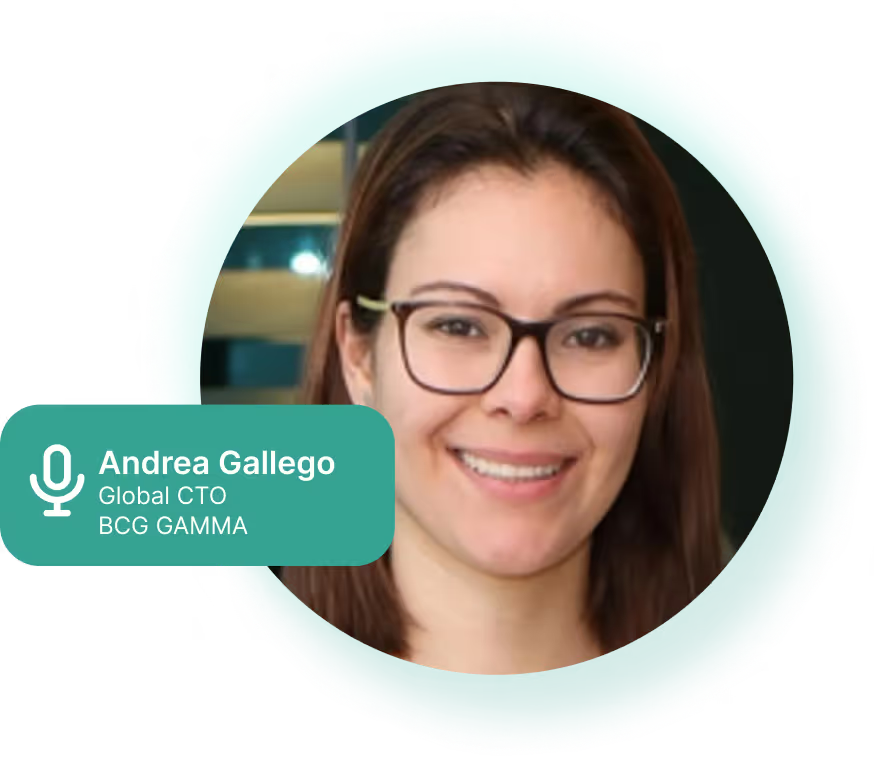
Green Computing and Data Unlocking: Mentorship for Tech Leaders with Andrea Gallego, Global CTO at BCG GAMMA
Andrea Gallego (Global CTO at BCG GAMMA) has taken her career from large financial institutions, to rapidly growing NGOs, and ultimately to this intersection of consulting and tech. Listen in to hear her thoughts on the value of mentorships between women, how she became interested in startup culture, possible new ways to leverage information at consulting groups, and more.
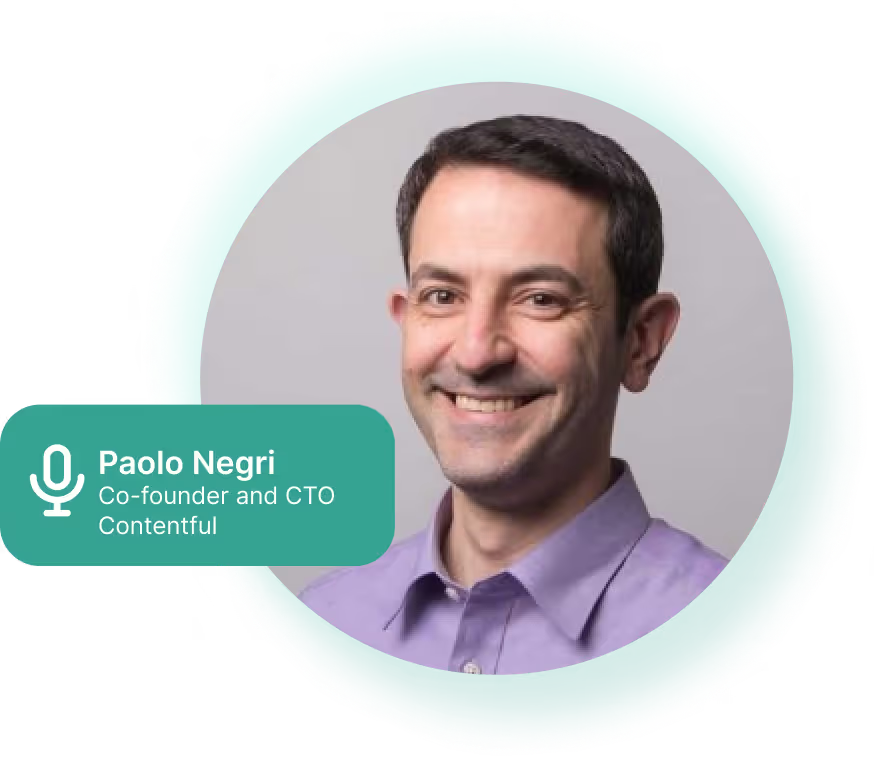
Internal Knowledge Management: Experimentation While Scaling with Paolo Negri, Co-founder at Contentful
Paolo walks us through his early career at startups across Europe, how he built a company solving a problem he faced at those very startups, why he encourages a culture based on experimentation at Contentful, and much more.
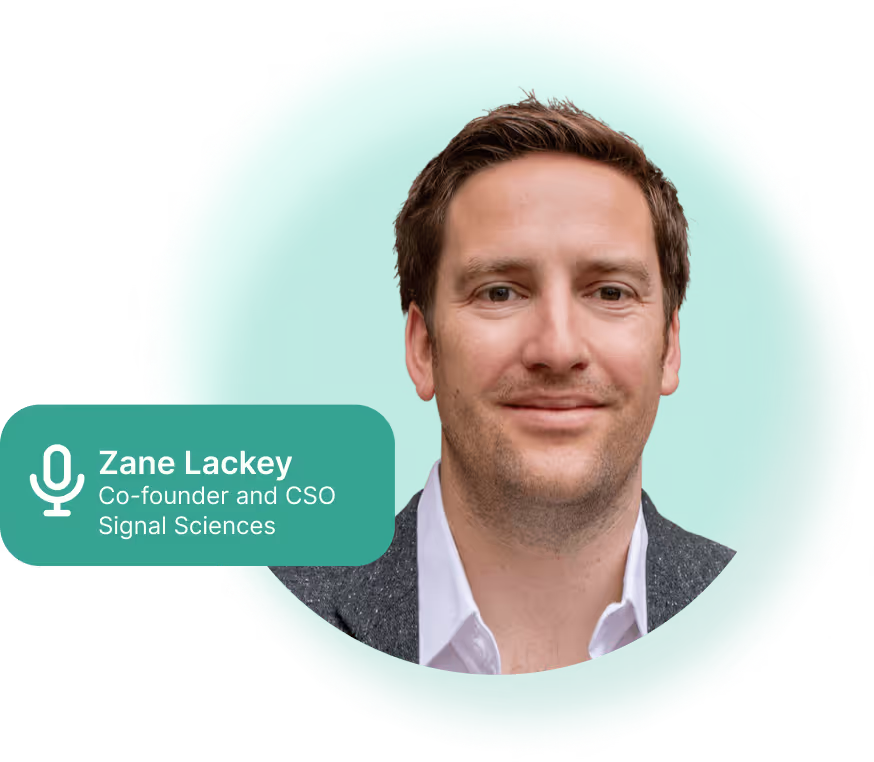
Securing Digital Transformation: Practical Lessons from Signal Sciences with Zane Lackey, Co-founder at Signal Sciences
Zane is a Co-founder and Chief Security Officer at Signal Sciences, a web-application security company acquired by Fastly. Zane shares what his career has taught him about security, founding teams, and what the future holds for digital transformations.
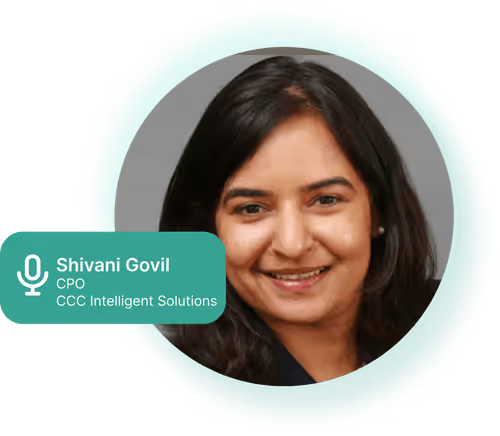
Innovation Culture: Enterprise vs. Startup Technology Scaling with Shivani Govil, CPO at CCC Intelligent Solutions
Innovation has been a central focus in Shivani Govil's career, including during her time at Silicon Valley Startups, SAP, and in her current role as Chief Product Officer at CCC Intelligent Solutions, a modern insurance solutions company. We dove into how she thinks innovation works at different scales, business units, industries, and more.
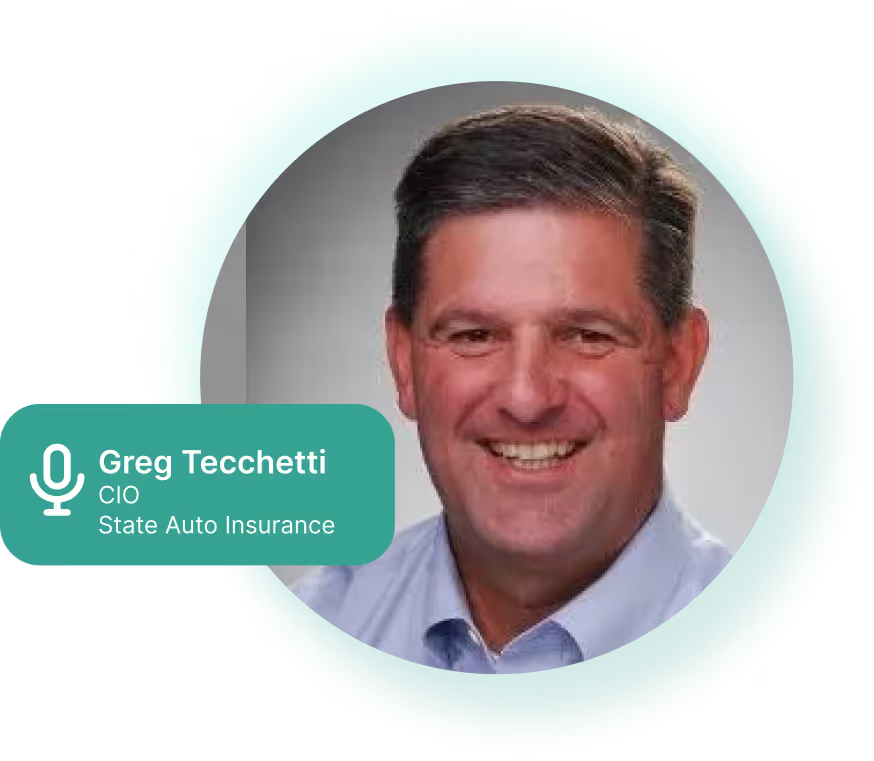
Startup to Enterprise Ops: Lessons for Serial Entrepreneurs with Greg Tacchetti, CIO at State Auto Insurance
Atolio's co-founder Mark Matta interviews Greg Tacchetti, CIO at State Auto Insurance. Greg shares his story, what he learned from his previous experience as a co-founder, which tech he's most excited about these days, and more.

SaaS Sprawl and Transparency: Scaling Internal Employee Directories with Alex Solomon, CTO and Co-founder at PagerDuty
Alex Solomon (CTO & Co-founder at PagerDuty) joins us to talk about the early days at PD and some critical decisions about transparency, documentation, employee experience, and more.
Engineering Transparency: Building a Culture of Urgency (Without Panic) with Steve Zerby, CIO at Owens Corning
Fortune 500 CIO Steve Zerby talks with us about the culture of urgency that he is helping foster at Owens Corning and how it relates to ego, transparency, service, and more.

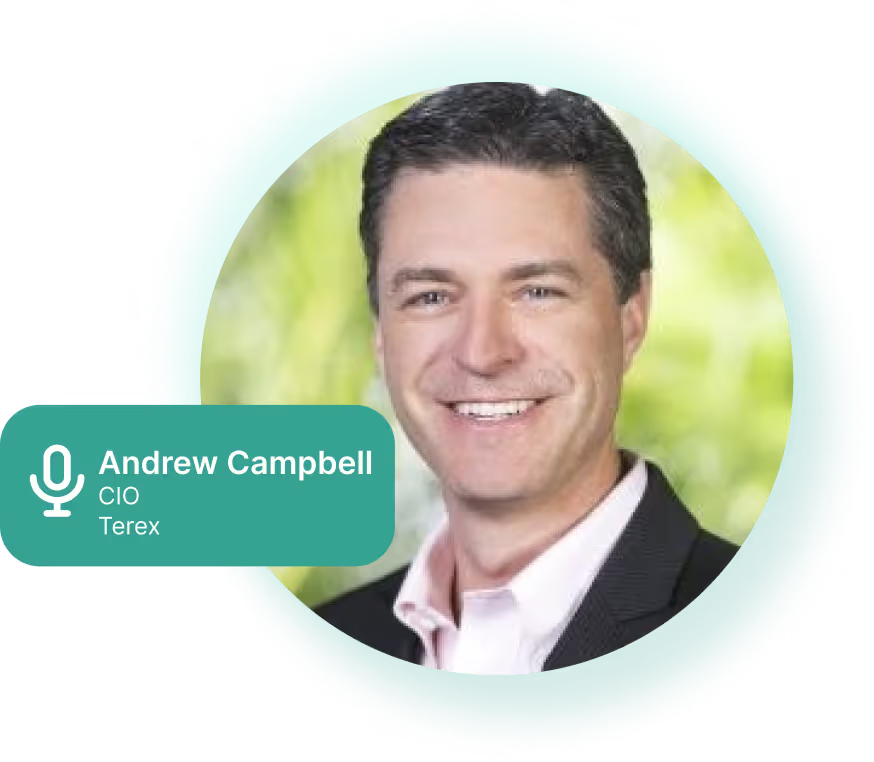
Purposeful Innovation: Avoiding Single-Vendor Lock-in Risk with Andrew Campbell, CIO at Terex Corporation
Andrew talks with us about a number of topics, including the concept of purposeful innovation at Terex, the drawbacks to single-vendor environments, his reasons for being a servant leader, and more.
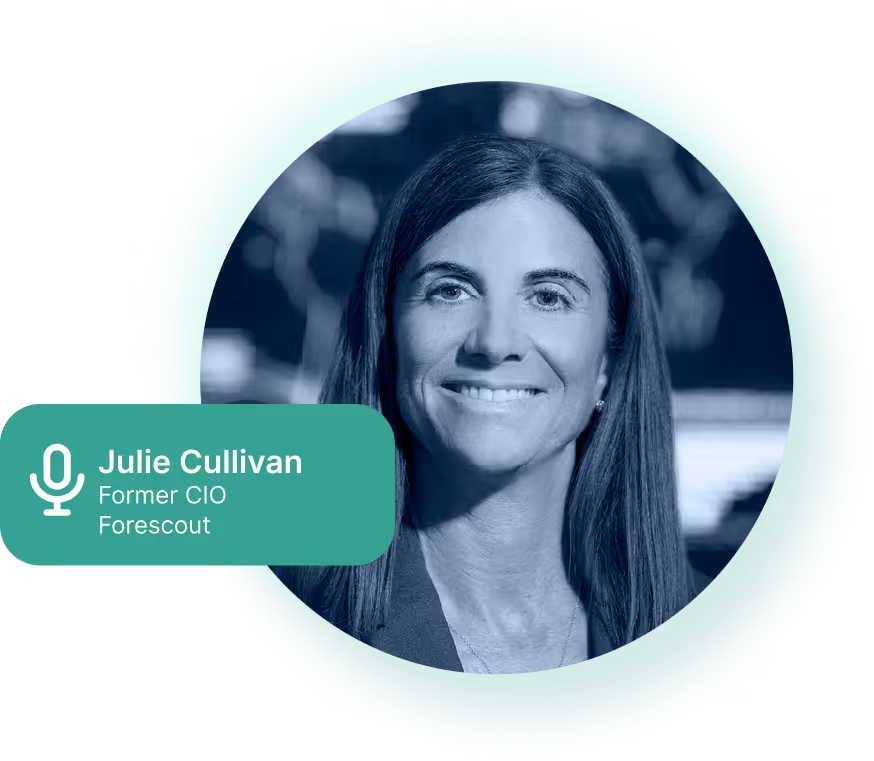
CIO Leadership Advice: Lessons from Sales and Go-to-Market with Julie Cullivan, Former Forescout CIO
Julie (Board Director at Axon, HeartFlow, and AaDya) joins us to share how she handled leading both technology & people at Forescout, why she took the leap to become a first-time CIO at FireEye, what she learned from her go-to-market roles at McAfee & Autodesk, and more.
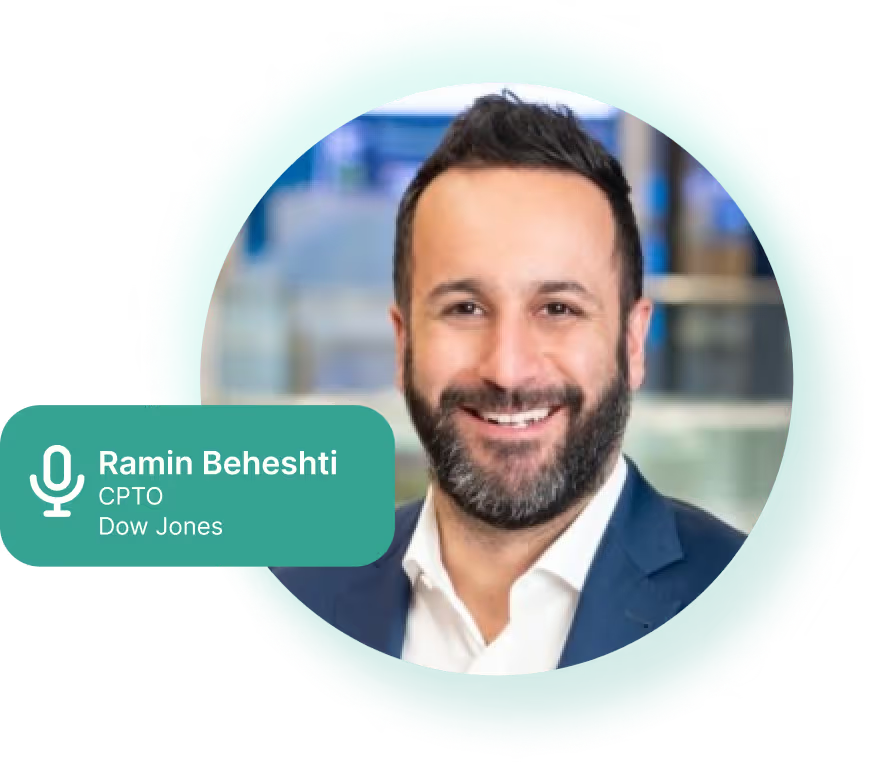
CIO to CPTO Transition: Shaping Product Culture and Curiosity with Ramin Beheshti, CPTO at Dow Jones
Ramin is the Chief Product & Technology Officer at Dow Jones, publisher of The Wall Street Journal, Barrons, Marketwatch, and more. He talks leadership lessons, the value of curiosity, his approach to working with startups, and more.
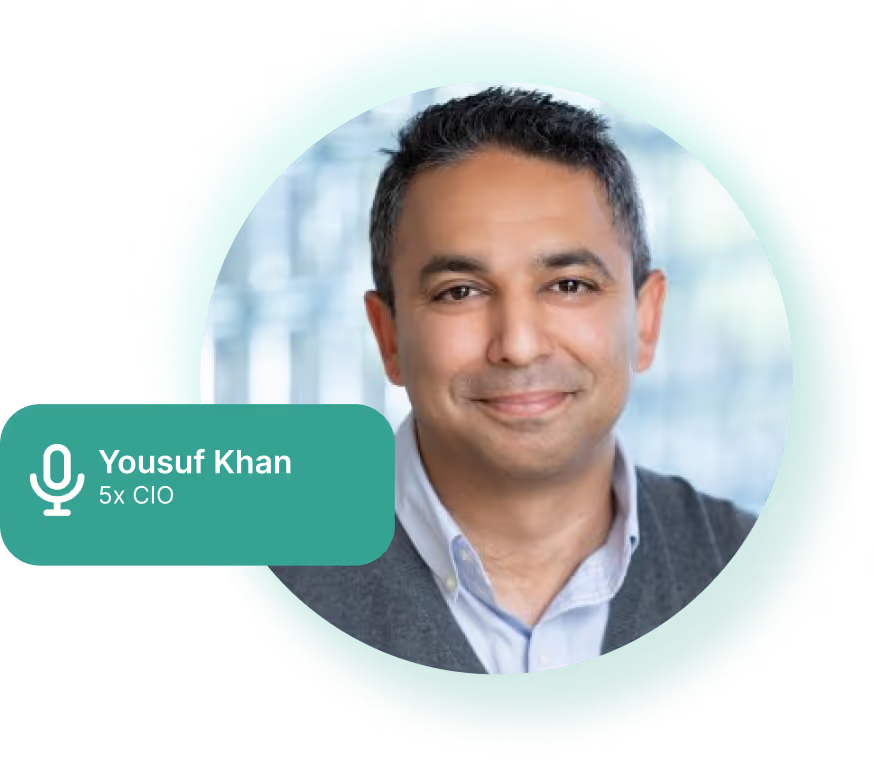
CIO to VC: Evaluating Startup Tech and Early-Stage Bets with Yousuf Khan, Former 5x CIO
Our first guest is Yousuf Khan, who discusses what he learned on his journey from accidental CIO at companies like Automation Anywhere, Moveworks, and Pure Storage to unconventional VC at Ridge Ventures.