IT Risk Management: Leading Teams Through Change and Technical Debt with Chris Pesola, CIO at Plex Systems
Chris Pesola is CIO at Plex Systems, a Rockwell Automation company. Chris talks with us about how his diverse career informs how and why he loves to mentor people.
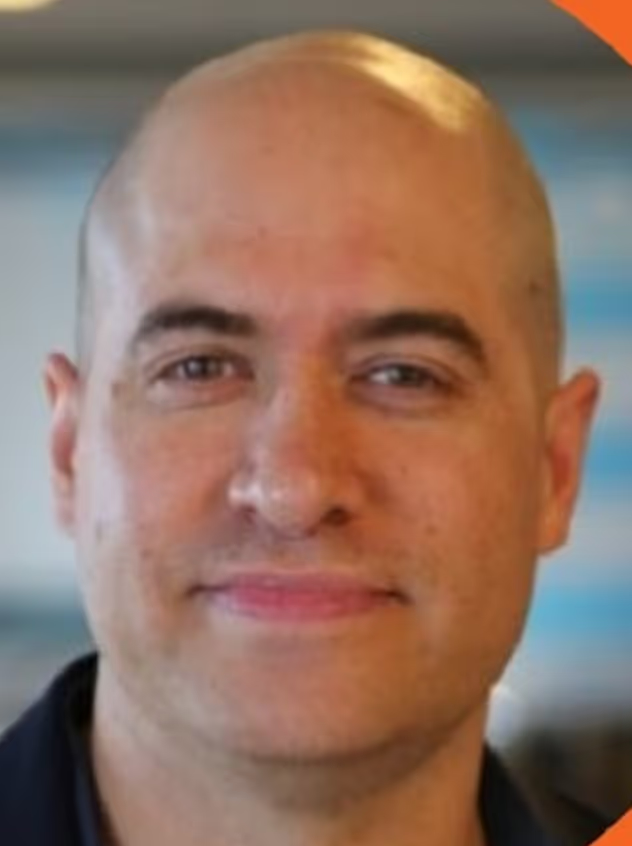
Chris Pesola
Plex Systems CIO
IT Risk Management: Leading Teams Through Change and Technical Debt with Chris Pesola, CIO at Plex Systems
Chris Pesola is CIO at Plex Systems, a Rockwell Automation company. Chris talks with us about how his diverse career informs how and why he loves to mentor people.
1:33 Change, risk, and leaving your comfort zone
23:40 Learning from mentoring
32:50 How to listen and give perspective
40:50 Chris’ first mentor
“I've had many mentors myself, which is why I have the pay it forward mindset.”
Chris Pesola
Plex Systems CIO
Chris Pesola on Risk-Taking, Career Reinvention, and Why Great Mentors Do a Lot More Listening Than Talking
Chris Pesola, CIO, Plex Systems (Rockwell Automation) | Interviewed by Luke Alie of Atolio
Chris Pesola is the CIO at Plex Systems, a manufacturing software solutions company acquired by Fortune 500 company Rockwell Automation. His career path is genuinely unusual: he wanted to be a high school math teacher, landed an IT consulting job at Ernst and Young instead, moved through marketing and sales roles, and ultimately became a CIO. He talks about what a diverse career teaches you about risk, how to mentor people who are stuck without doing the work for them, and why the best piece of advice he ever received came at the end of a very long work night.
From Would-Be Math Teacher to EY Consultant: The First Big Risk
Luke Alie (LA): You've described putting your career through the ringer and coming out a better person. Where does that story start?
Chris Pesola (CP): It starts in college. I went to school to become a high school math teacher. During student teaching I discovered that not everyone loves math the way I do. Some students struggled and it frustrated me. But those same students in my computer science classes were thrilled. Genuinely easy to teach. And so my passion shifted.
When I was interviewing for jobs, I came across a posting outside a classroom for IT consulting. I had no idea what that meant, but it sounded like what I was describing I wanted to do. The company was Ernst and Young. In the interview room I was clearly the odd candidate: not from the business school, not from the tech program they usually recruited from. One of the interviewers finally just asked me why I was there. I said something along the lines of: IT consulting and teaching seem similar to me. You come up with a plan and you find a way to help someone understand it, just with adults instead of kids. He paused and said: OK, let's keep talking. And they offered me the job.
That moment set a template for how I've approached my whole career. Taking the risk of applying to something you don't quite fit for produces either a hard no or a conversation that changes everything. If you don't take the leap, you don't get to find out.
The Career Diversity That Became a Superpower
LA: You've held roles in IT, marketing, sales, and more. What did that breadth of experience give you?
CP: Consulting is a grind. You travel constantly, work ridiculous hours, and cram experience at a pace you can't get anywhere else. I credit my early success entirely to that environment. But burnout comes, and at some point I said: how do I break free of the consulting grind and take what I've learned into something more stable? That led me to a series of roles at different-sized companies across different functions.
Each time I went somewhere new, I had to prove myself in a different context. That builds a certain flexibility and confidence. You realize that the risk of change is survivable. And you become more useful as a leader because you understand how every department thinks, not just IT. When I eventually became a CIO, I had been the person on the other side of the table many times. That changes how you have conversations with your internal customers.
Mentoring: Listening More, Solving Less
LA: Tell me about your involvement in mentoring.
CP: I got involved in a local program a few years back helping younger people in tech understand what their career paths could look like. What I quickly learned is that some of the most technically brilliant people are deeply introverted and struggle with the soft aspects of career advancement: presenting, advocating for themselves, managing up. My job wasn't to make them someone they're not. It was to lay out their options honestly.
You can either face that fear, start small, and grow. Or you can say I'm not going to do that, but then you also have to reckon with what it means for your goals. If someone tells me they want to manage a team but also tells me they're not willing to develop certain communication skills, I can't pretend those two things are fully compatible. A good mentor helps someone see the gap, not by being harsh, but by asking enough questions to let the person find the answer themselves.
A lot of people enter mentoring programs because they want help with career advancement, but what they actually need is someone to help them diagnose where they are stuck. When I dig back far enough with some mentees, I find that they have been pushed by circumstance into a role they never actually chose. They have built their entire plan around an identity that was assigned to them rather than claimed. Getting back to the passion that was there before those forced moves is often the most valuable thing a mentor can do.
The reason I enjoy it is the same reason I wanted to teach: I like people and I like helping them. And I learn from every mentee. That growth goes both ways.
The Mentor Moment That Stuck: Is Anybody Going to Die?
LA: Can you share some of the mentorship you've received?
CP: My first memorable mentoring experience was late at night during a consulting project. A senior manager poked his head over the cubicle wall where two of us were grinding through a problem. He looked at us and asked: is anybody going to die? We said: what? He said: is anybody going to die if you don't finish this tonight? Go home. Think on it. You're going to come in and solve it in five minutes.
That broke through everything. As a young professional trying to make your mark, being told by the senior person running the whole account that it is not about the number of hours you put in was just enormous. I started paying close attention to him after that, asking questions, learning from how he managed. Eventually I asked him formally to be my mentor. He agreed. We didn't meet on a rigid schedule. It was a phone call here, an email there. But the relationship lasted a couple of years and shaped my entire management style.
The through-line from that manager to how I mentor today is the same: you manage people the way you want to be managed. You treat the team how you want to be treated. You reduce the drama. You make clear that you trust them. And then you just ask: is the work getting done? Get it done well, at high quality. That's it.
LA: Chris, thank you so much for coming on the show.
CP: Thanks for having me, Luke. Anytime.
Latest Episodes
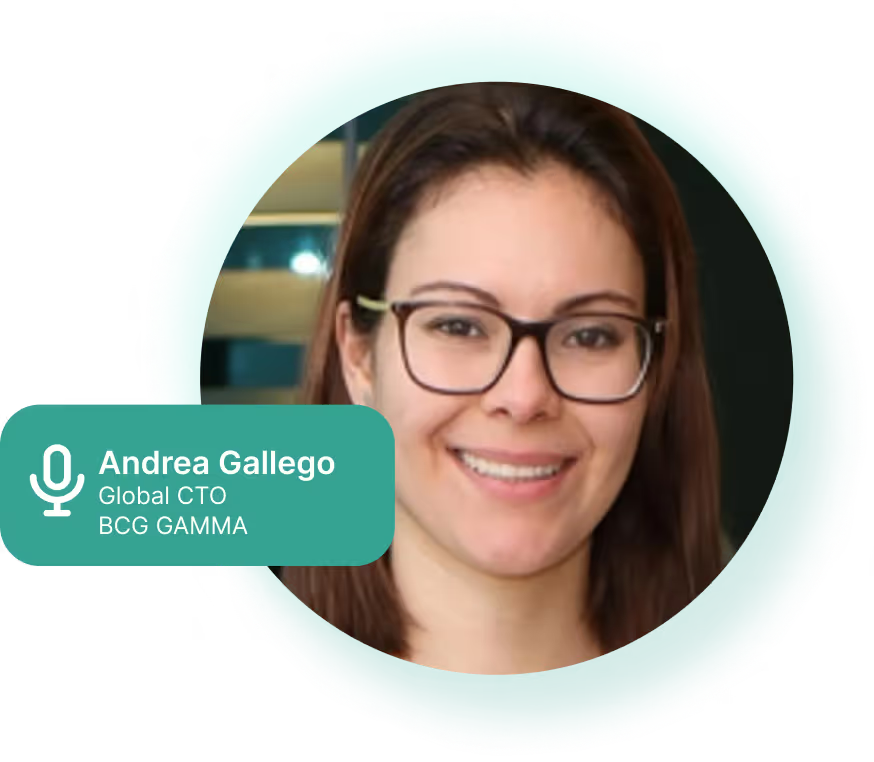
Green Computing and Data Unlocking: Mentorship for Tech Leaders with Andrea Gallego, Global CTO at BCG GAMMA
Andrea Gallego (Global CTO at BCG GAMMA) has taken her career from large financial institutions, to rapidly growing NGOs, and ultimately to this intersection of consulting and tech. Listen in to hear her thoughts on the value of mentorships between women, how she became interested in startup culture, possible new ways to leverage information at consulting groups, and more.
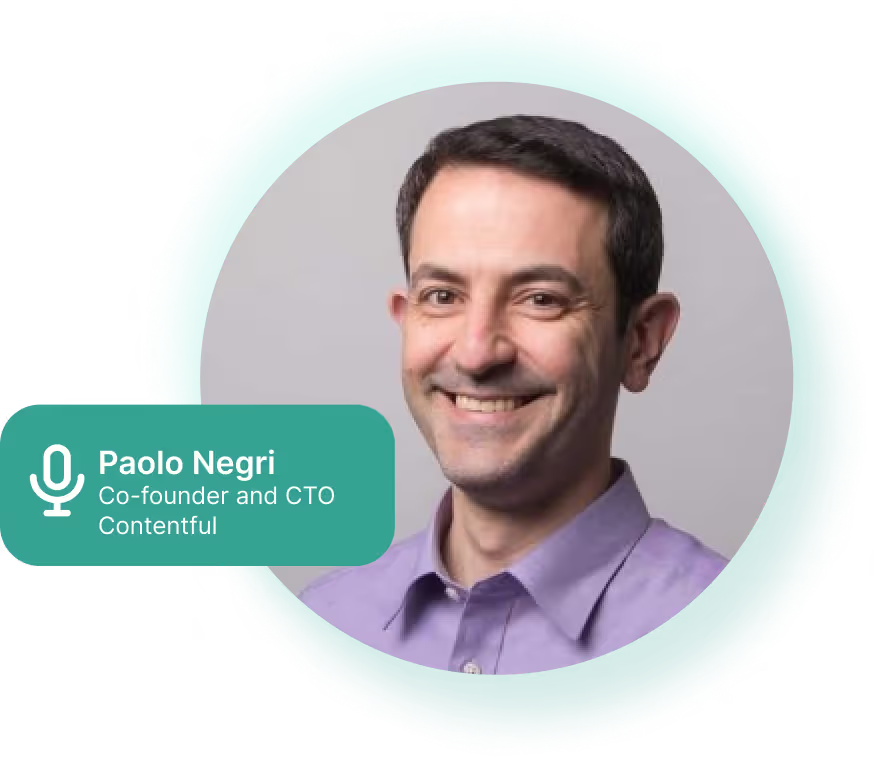
Internal Knowledge Management: Experimentation While Scaling with Paolo Negri, Co-founder at Contentful
Paolo walks us through his early career at startups across Europe, how he built a company solving a problem he faced at those very startups, why he encourages a culture based on experimentation at Contentful, and much more.
Securing Digital Transformation: Practical Lessons from Signal Sciences with Zane Lackey, Co-founder at Signal Sciences
Zane is a Co-founder and Chief Security Officer at Signal Sciences, a web-application security company acquired by Fastly. Zane shares what his career has taught him about security, founding teams, and what the future holds for digital transformations.
Innovation Culture: Enterprise vs. Startup Technology Scaling with Shivani Govil, CPO at CCC Intelligent Solutions
Innovation has been a central focus in Shivani Govil's career, including during her time at Silicon Valley Startups, SAP, and in her current role as Chief Product Officer at CCC Intelligent Solutions, a modern insurance solutions company. We dove into how she thinks innovation works at different scales, business units, industries, and more.
Startup to Enterprise Ops: Lessons for Serial Entrepreneurs with Greg Tacchetti, CIO at State Auto Insurance
Atolio's co-founder Mark Matta interviews Greg Tacchetti, CIO at State Auto Insurance. Greg shares his story, what he learned from his previous experience as a co-founder, which tech he's most excited about these days, and more.

SaaS Sprawl and Transparency: Scaling Internal Employee Directories with Alex Solomon, CTO and Co-founder at PagerDuty
Alex Solomon (CTO & Co-founder at PagerDuty) joins us to talk about the early days at PD and some critical decisions about transparency, documentation, employee experience, and more.
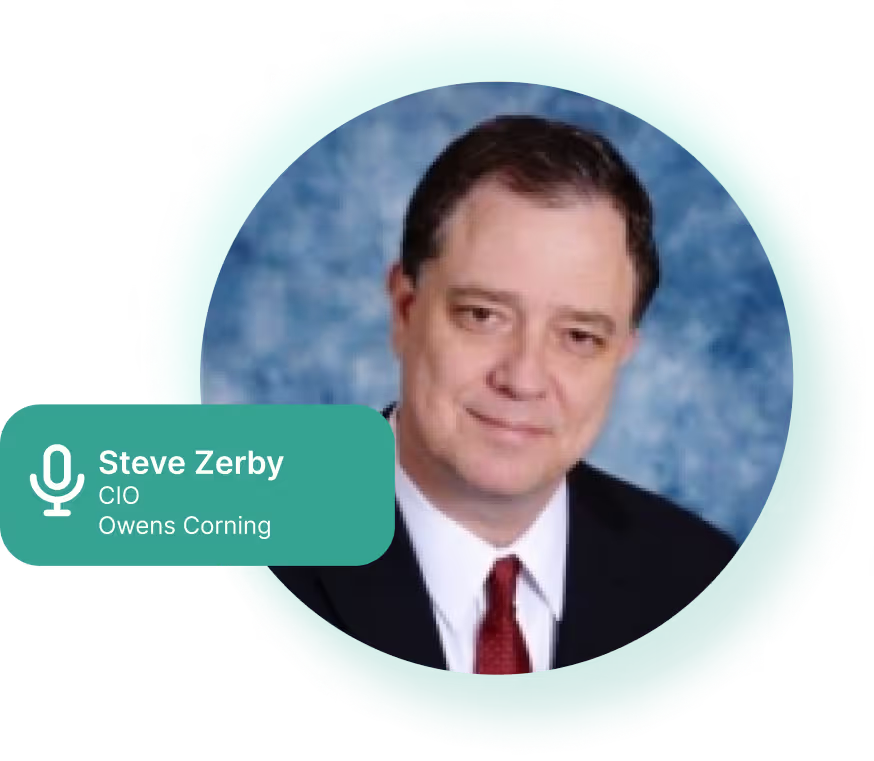
Engineering Transparency: Building a Culture of Urgency (Without Panic) with Steve Zerby, CIO at Owens Corning
Fortune 500 CIO Steve Zerby talks with us about the culture of urgency that he is helping foster at Owens Corning and how it relates to ego, transparency, service, and more.
Purposeful Innovation: Avoiding Single-Vendor Lock-in Risk with Andrew Campbell, CIO at Terex Corporation
Andrew talks with us about a number of topics, including the concept of purposeful innovation at Terex, the drawbacks to single-vendor environments, his reasons for being a servant leader, and more.
CIO Leadership Advice: Lessons from Sales and Go-to-Market with Julie Cullivan, Former Forescout CIO
Julie (Board Director at Axon, HeartFlow, and AaDya) joins us to share how she handled leading both technology & people at Forescout, why she took the leap to become a first-time CIO at FireEye, what she learned from her go-to-market roles at McAfee & Autodesk, and more.
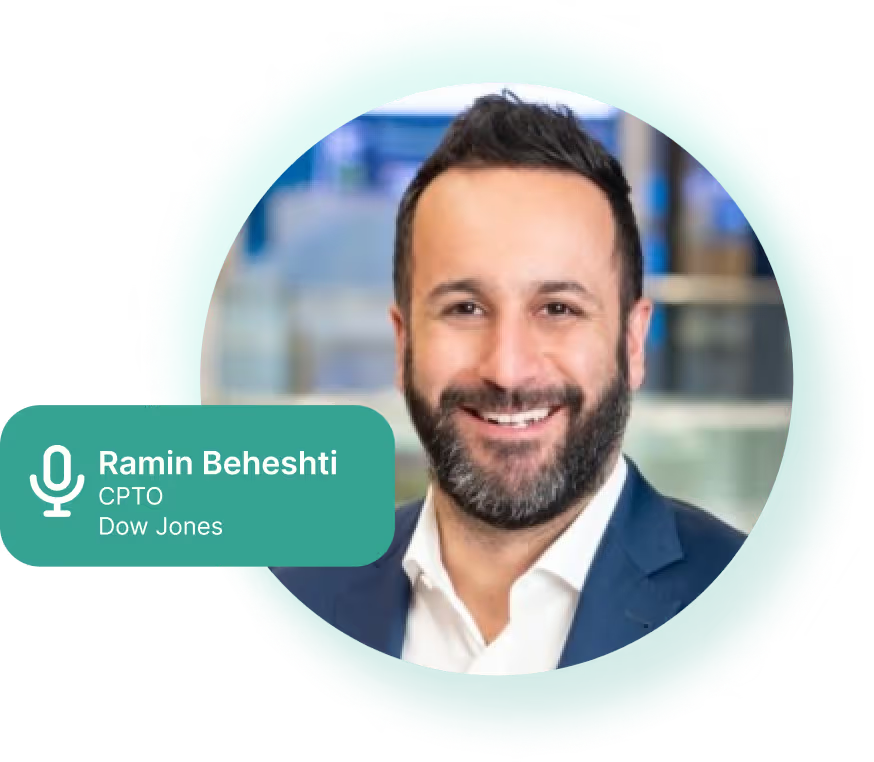
CIO to CPTO Transition: Shaping Product Culture and Curiosity with Ramin Beheshti, CPTO at Dow Jones
Ramin is the Chief Product & Technology Officer at Dow Jones, publisher of The Wall Street Journal, Barrons, Marketwatch, and more. He talks leadership lessons, the value of curiosity, his approach to working with startups, and more.
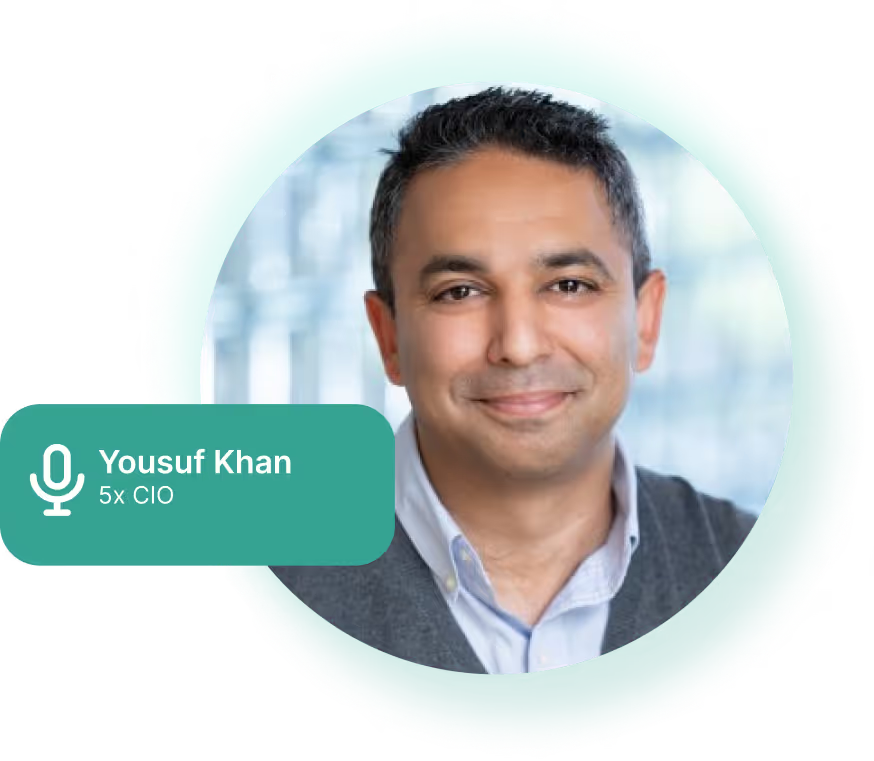
CIO to VC: Evaluating Startup Tech and Early-Stage Bets with Yousuf Khan, Former 5x CIO
Our first guest is Yousuf Khan, who discusses what he learned on his journey from accidental CIO at companies like Automation Anywhere, Moveworks, and Pure Storage to unconventional VC at Ridge Ventures.