CIO Peer Communities: Strategic Startup Partnerships and 6G with Dan Krantz, CIO at Keysight Technologies
Dan talks leadership and startups, while also managing to bring up nuclear launch codes, 6G, and much more.
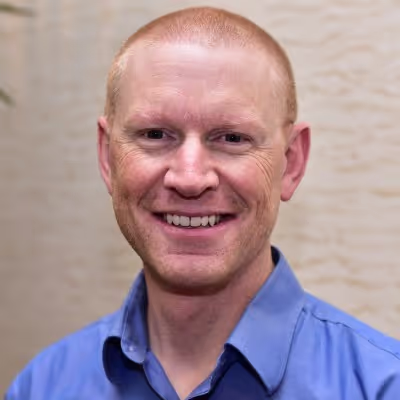
Dan Krantz
Keysight Technologies CIO
CIO Peer Communities: Strategic Startup Partnerships and 6G with Dan Krantz, CIO at Keysight Technologies
Dan talks leadership and startups, while also managing to bring up nuclear launch codes, 6G, and much more.
0:51 From Los Alamos National Laboratory to HP
4:21 Lessons from serving as CISO
8:58 Generating leads with IT
13:06 Why CISO’s should “stay in the pack”
15:34 Changes Keysight made to better work with startups
20:35 What comes after being CIO?
“The startups that find some companies like us to partner with are going to be the most successful because now they're going to get real world input, tailoring their solutions to fix real world problems right then and there, and it'll take off.”
Dan Krantz
Keysight Technologies CIO
Dan Krantz on Nuclear Codes, 6G, Startup Partnerships, and What Comes After CIO
Dan Krantz, CIO, Keysight Technologies | Interviewed by Luke Alie of Atolio
Dan Krantz is the CIO at Keysight Technologies, a Fortune 1000 company making equipment and software for testing electronics. His career began at the Los Alamos National Laboratory digitizing nuclear weapons codes, moved through HP and Agilent, and eventually landed him as CIO of a company where IT is also a lead generator for commercial customers. He talks about how his time as CISO shaped his view of coalition-building leadership, why startups have been central to Keysight's IT transformation, and what the career path beyond CIO might actually look like.
From Nuclear Weapons Codes to 6G: A Career Built on Technology That Changes the World
Luke Alie (LA): Tell me about your background and how you arrived at Keysight, which spun out of Agilent, which spun out of HP.
Dan Krantz (DK): I grew up in Los Alamos, New Mexico, the site of the Manhattan Project. I joined the National Laboratory as a software engineer doing classified high-performance computing at the end of the Cold War. My mission was to digitize our nation's nuclear weapons codes. What I learned was the difference technology can make in making the world a better place. We were using digital tools and high-performance computing to address nuclear proliferation. That shaped everything for me.
After the lab I moved to Hewlett-Packard, which was at the forefront of 3G cellular. I joined HP to work on testing equipment for that generation of mobile technology. Eventually 70 percent of the world's cell phones were being produced and tested with HP equipment. We became Agilent, then Keysight. And today we're already working on 6G, terabit-per-second downloads, and quantum computing. These are extraordinarily smart people, and my challenge as CIO is elevating IT's game to be on par with them.
From CIO to CISO: Why Cybersecurity Leadership Is About Coalition-Building
LA: You held CISO responsibilities at Keysight as well. How did that experience inform your view of leadership?
DK: It freaked me out a little, because once you've done it you know just how dangerous the world is. But the biggest learning wasn't about the technology. It was about communication. When I tried to tell the board about cybersecurity using the language I used internally, all the hacker jargon and technical specifics, it went right over their heads. The learning was to translate everything into business risk. What are we doing about it? What does it mean to the company? That's what matters to the board.
When I eventually hired a new CISO to report to me, I deliberately looked for a coalition-builder and a translator rather than a purely technical expert. We already had great cybersecurity technologists on the team. What I needed was someone who could rally the entire company to be cyber warriors on defense. It takes a village to protect intellectual property, and the leader of that village needs to be a relationship person first.
IT as a Lead Generator: Keysight-on-Keysight
LA: You've mentioned that IT at Keysight is a lead generator. What does that mean?
DK: Keysight has historically sold hardware instruments to electrical and RF engineers. Over the last few years we layered on a suite of software and testing capabilities that now also serve IT departments at our customers. Network visibility, software test capabilities, things that CIOs care about. So now I reach out to my CIO peers and say: we use this ourselves, here's our case study, do you want to hear more? I am not on quota. I don't get commission. It's just peer-to-peer conversation about what's worked for us. If a CIO says they're interested, I connect them with the product team. That's what I mean by IT as a lead generator.
The Strategic Case for Working with Startups
LA: How did you start working with startups, and what's your approach?
DK: When Keysight spun out in 2015, we had a clean sheet of paper. On the application side, I decided to push to the extreme and see if startups could replace some of the tried-and-true large vendors. Our first experiment was financial close and consolidation, which is exactly the kind of thing you wouldn't normally take a risk on. But we had been struggling with a large entrenched partner, and a 30-customer startup was willing to actually listen.
What happened was almost like having our own R&D team. We'd give them requirements, they'd sprint, and weeks later we'd have new capabilities. They'd then take what we needed and market it to other customers. Win-win. We've done the same with analytics and other areas. The key enabler was shifting from a mostly outsourced IT model to strategic insourcing. Large managed service providers don't have startup technologies qualified in their offerings. If you want to work with startups, you need your own technologists who can be the applied layer on top of what these startups are building.
What Comes After CIO? The Career Question Dan Is Actively Exploring
LA: What's the best question I haven't asked you?
DK: What is the career path once you're at the CIO level? I'm only four years into the role, so I'm not near retirement, but I'm starting to ask: do you become a serial CIO, moving from company to company every few years? Do you stay as CIO for 10 years at one place? Or does the CIO role evolve into broader executive leadership over time?
I have a call coming up with a former Broadcom CIO who is now their CTO and head of software operations. He took the CIO role and expanded it into broader business responsibility. I'm curious how people do that successfully. CIOs have a horizontal view across nearly every department. We work with more stakeholders than almost any other function. That expertise should have a higher ceiling than it often does, and I think the pandemic has accelerated a recognition of that by executive teams who saw how critical IT was in enabling remote work and keeping innovation running. What CIOs do with that recognition is the interesting question.
LA: Dan, thank you so much.
DK: Great questions. It's been a pleasure.
Latest Episodes
Green Computing and Data Unlocking: Mentorship for Tech Leaders with Andrea Gallego, Global CTO at BCG GAMMA
Andrea Gallego (Global CTO at BCG GAMMA) has taken her career from large financial institutions, to rapidly growing NGOs, and ultimately to this intersection of consulting and tech. Listen in to hear her thoughts on the value of mentorships between women, how she became interested in startup culture, possible new ways to leverage information at consulting groups, and more.
Internal Knowledge Management: Experimentation While Scaling with Paolo Negri, Co-founder at Contentful
Paolo walks us through his early career at startups across Europe, how he built a company solving a problem he faced at those very startups, why he encourages a culture based on experimentation at Contentful, and much more.
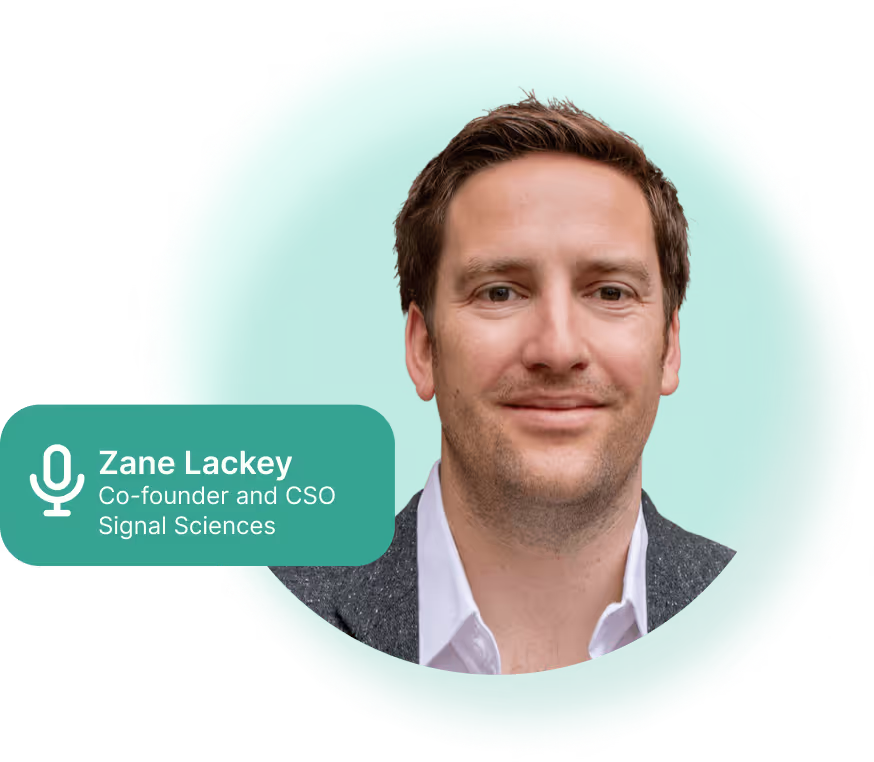
Securing Digital Transformation: Practical Lessons from Signal Sciences with Zane Lackey, Co-founder at Signal Sciences
Zane is a Co-founder and Chief Security Officer at Signal Sciences, a web-application security company acquired by Fastly. Zane shares what his career has taught him about security, founding teams, and what the future holds for digital transformations.
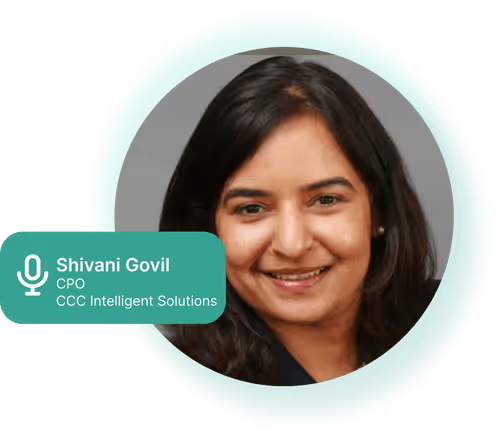
Innovation Culture: Enterprise vs. Startup Technology Scaling with Shivani Govil, CPO at CCC Intelligent Solutions
Innovation has been a central focus in Shivani Govil's career, including during her time at Silicon Valley Startups, SAP, and in her current role as Chief Product Officer at CCC Intelligent Solutions, a modern insurance solutions company. We dove into how she thinks innovation works at different scales, business units, industries, and more.
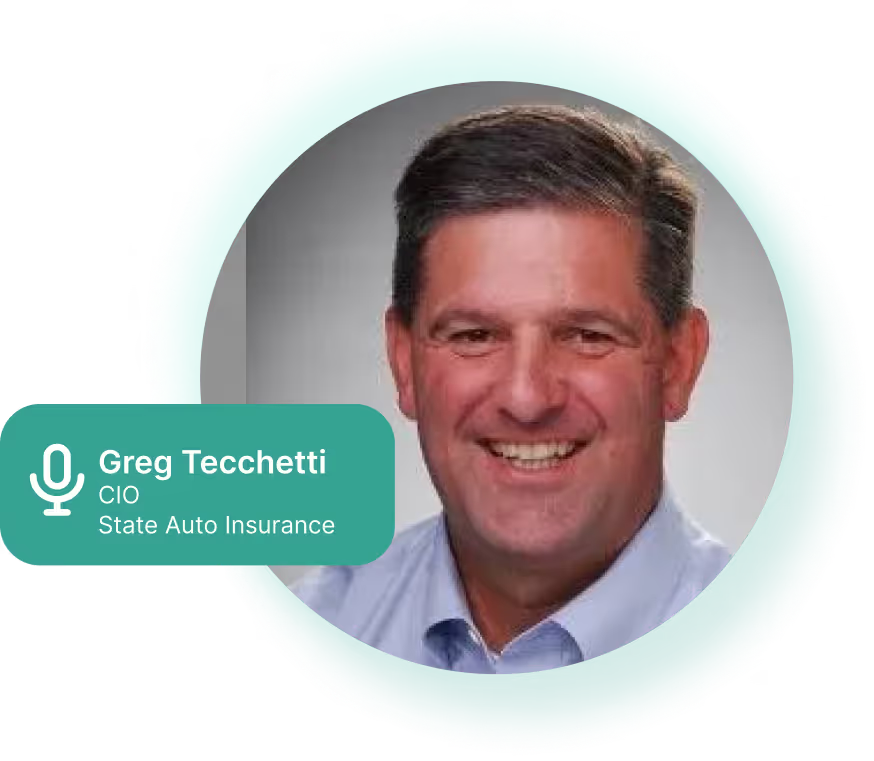
Startup to Enterprise Ops: Lessons for Serial Entrepreneurs with Greg Tacchetti, CIO at State Auto Insurance
Atolio's co-founder Mark Matta interviews Greg Tacchetti, CIO at State Auto Insurance. Greg shares his story, what he learned from his previous experience as a co-founder, which tech he's most excited about these days, and more.
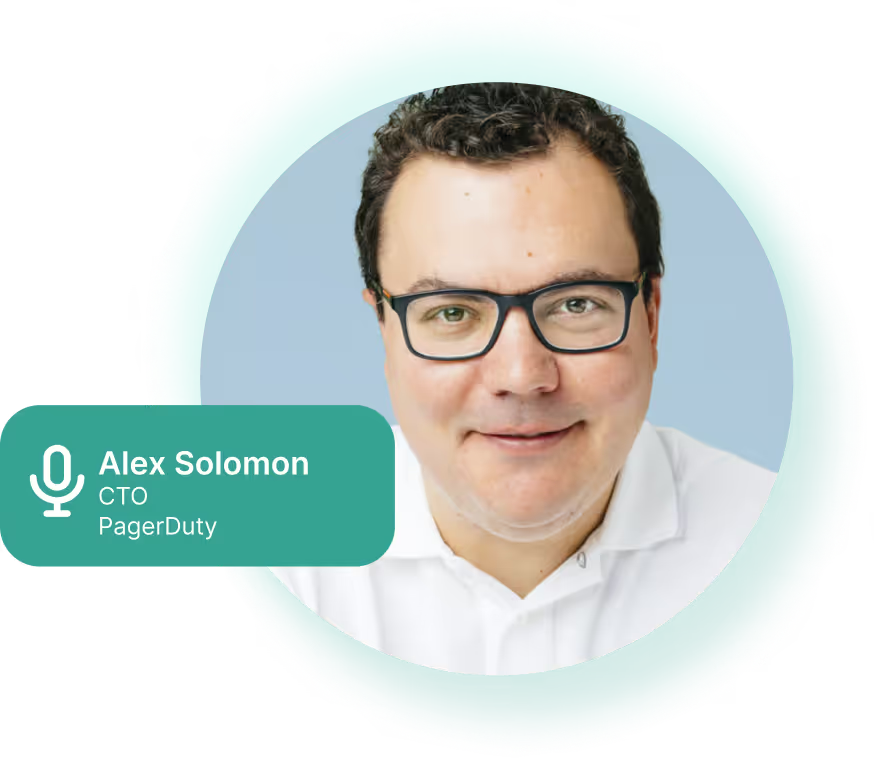
SaaS Sprawl and Transparency: Scaling Internal Employee Directories with Alex Solomon, CTO and Co-founder at PagerDuty
Alex Solomon (CTO & Co-founder at PagerDuty) joins us to talk about the early days at PD and some critical decisions about transparency, documentation, employee experience, and more.
Engineering Transparency: Building a Culture of Urgency (Without Panic) with Steve Zerby, CIO at Owens Corning
Fortune 500 CIO Steve Zerby talks with us about the culture of urgency that he is helping foster at Owens Corning and how it relates to ego, transparency, service, and more.
Purposeful Innovation: Avoiding Single-Vendor Lock-in Risk with Andrew Campbell, CIO at Terex Corporation
Andrew talks with us about a number of topics, including the concept of purposeful innovation at Terex, the drawbacks to single-vendor environments, his reasons for being a servant leader, and more.
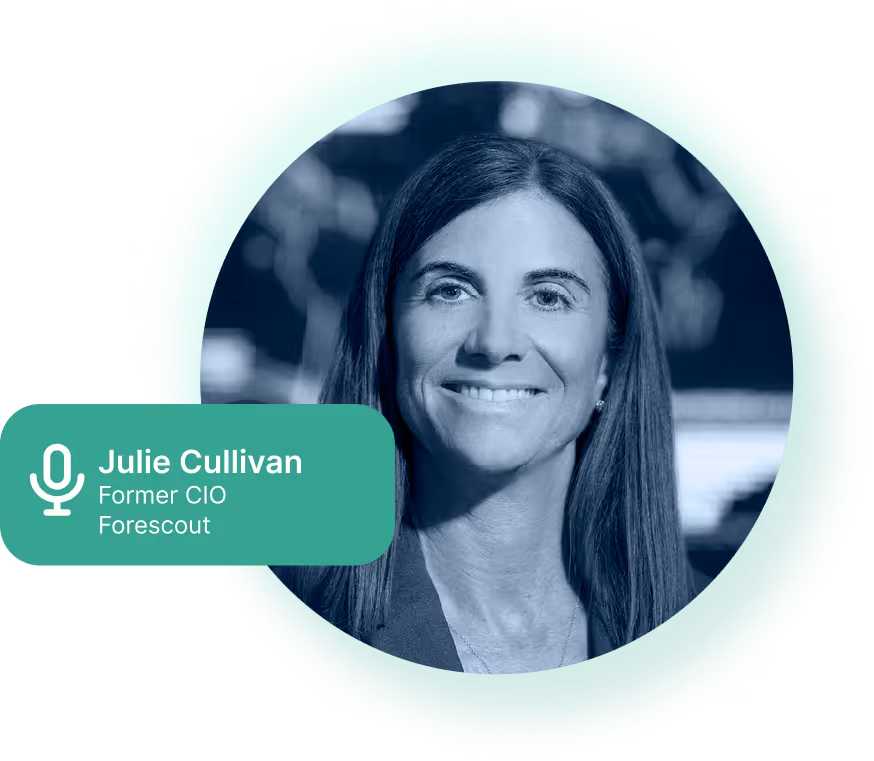
CIO Leadership Advice: Lessons from Sales and Go-to-Market with Julie Cullivan, Former Forescout CIO
Julie (Board Director at Axon, HeartFlow, and AaDya) joins us to share how she handled leading both technology & people at Forescout, why she took the leap to become a first-time CIO at FireEye, what she learned from her go-to-market roles at McAfee & Autodesk, and more.
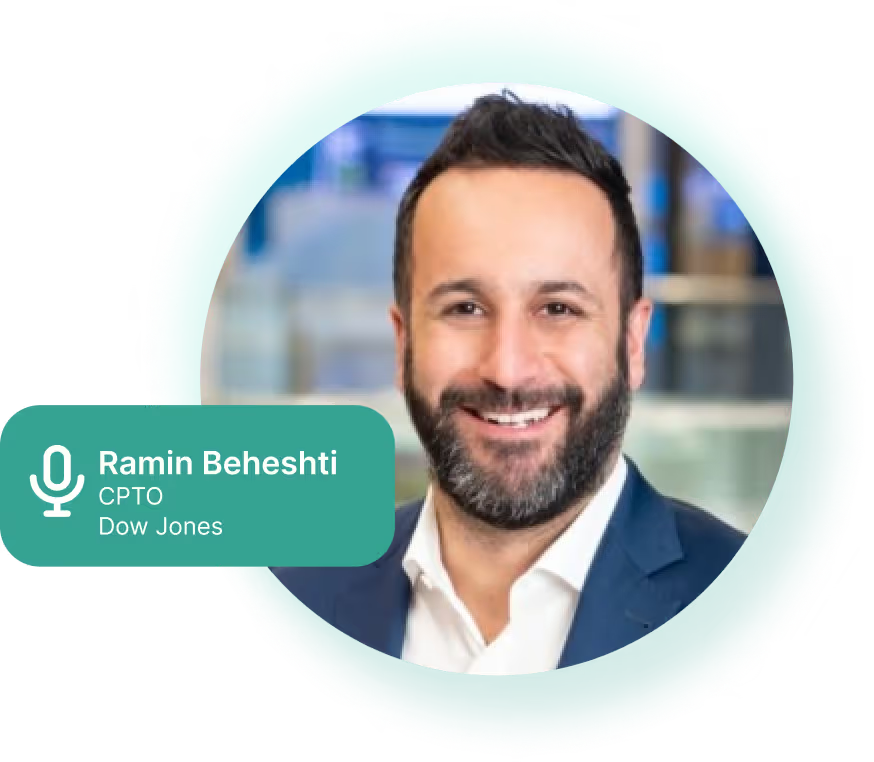
CIO to CPTO Transition: Shaping Product Culture and Curiosity with Ramin Beheshti, CPTO at Dow Jones
Ramin is the Chief Product & Technology Officer at Dow Jones, publisher of The Wall Street Journal, Barrons, Marketwatch, and more. He talks leadership lessons, the value of curiosity, his approach to working with startups, and more.
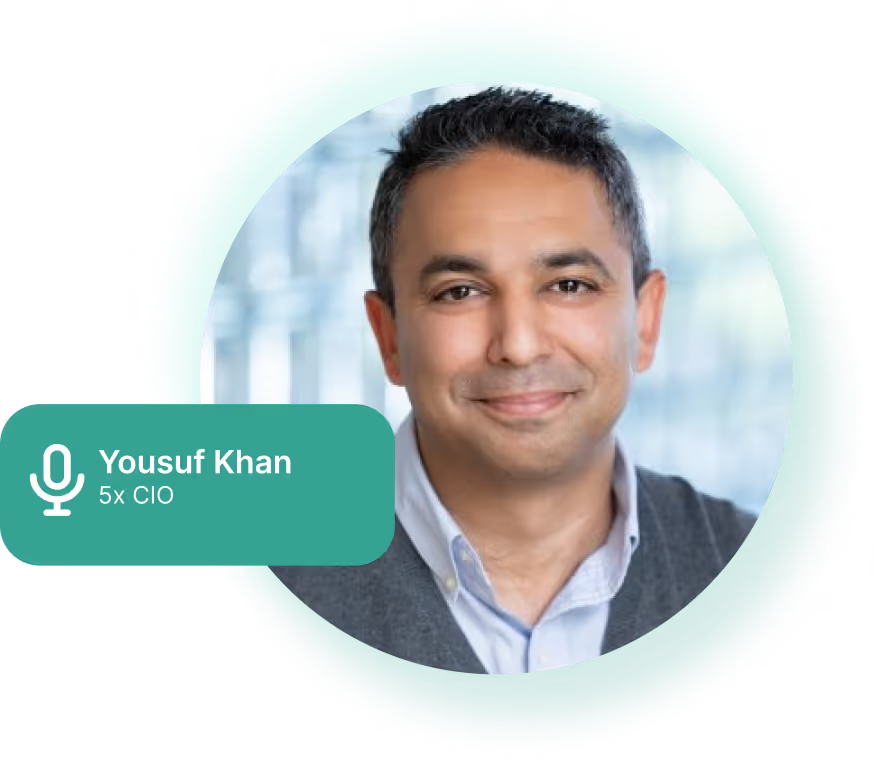
CIO to VC: Evaluating Startup Tech and Early-Stage Bets with Yousuf Khan, Former 5x CIO
Our first guest is Yousuf Khan, who discusses what he learned on his journey from accidental CIO at companies like Automation Anywhere, Moveworks, and Pure Storage to unconventional VC at Ridge Ventures.