IT Architecture Strategy: Empathy and Value in Business Partnerships with Andrew Sopko, Head of IT at Twitter
Andrew shares his experience translating the artistic process to IT.

Andrew Sopko
Twitter Head of IT
IT Architecture Strategy: Empathy and Value in Business Partnerships with Andrew Sopko, Head of IT at Twitter
Andrew shares his experience translating the artistic process to IT.
0:40 Andrew’s art
3:10 Translating the creative process to IT
7:00 Adding value in business partnerships
12:45 Why IT departments need to be empathetic
14:29 Hiring the right people
“There is a creative aspect to IT work, and I think about the architecture of a system and the landscape of data models and all of those things as part of the creative process.”
Andrew Sopko
Twitter Head of IT
Andrew Sopko on Art, Process, and Why IT at Twitter Is Really a Customer Experience Discipline
Andrew Sopko, Head of IT, Twitter | Interviewed by Luke Alie of Atolio
Andrew Sopko spent his early career as an artist, starting with ceramics and moving through printmaking and painting before making an accidental pivot into IT. He brings the same appreciation for process-driven creation to technology that he brought to the studio. In this conversation he talks about how Twitter's culture of transparency shapes what IT can accomplish, how he thinks about employee experience from the thirty-thousand-foot level down to the click, and why the most important thing is separating what a customer asks for from what they actually need.
From Ceramics to Code: How an Artist Ended Up in IT
Luke Alie (LA): Tell me about your background in art and how you got into IT.
Andrew Sopko (AS): I began in ceramics. What drew me to it was the process: the specific steps you have to go through, the relationship between the original intention and the outcome. The further you separate yourself from the work through process, the more you stretch the bounds of what the outcome might be. I loved incorporating the unknown through the extreme intentionality of a very specific procedure.
When I moved to printmaking, the same principle held. In painting too. A lot of my work was figurative but abstract, and it was always about that push and pull between original intent and result. I never planned to be in IT. I started working in it only because I was broke and trying to stay afloat while pursuing my MFA. One of those programs didn't accept me, and the next thing I knew I was fixing computers. And I noticed a similarity: there is a creative aspect to IT work, from desktop support to thinking about system architecture to building applications. That's what kept me going. I had found a place where process and discovery lived together the same way they did in the studio.
IT as Customer Experience at Twitter: The Thirty-Thousand-Foot View Down to the Click
LA: How has the perception of IT's role in employee experience changed at Twitter over your time there?
AS: Twitter's internal culture is genuinely a positive place to operate within. There's a strong focus on transparency, collaboration, and openness of dialog across the board, not just within IT. That foundation matters, because it means we can have honest conversations about value.
We think about employee experience in layers. At the thirty-thousand-foot level we say things like customer focus and creating value. At the next level we ask: what are the specific workflows we're trying to improve? What is the new hire experience? What is the help desk experience? What happens when someone enters a meeting or moves between connected tools? And then we get down to the nitty gritty: if I click this button, what happens next? Is it obvious? Is it clear? We do hands-on reviews at that level and ask hard questions even late in a project, because that individual interaction is where perception of IT is actually formed.
The honest truth is that most people notice when something goes wrong, not when it goes right. We take solace in positive experiences if we are not hearing too much about them. That comes back to the type of personality that can succeed in IT: someone who's comfortable not always getting the credit, who is focused on the quality of work and on outcomes, not on acclaim.
Partners, Not Providers: Redefining the IT Relationship with Internal Customers
LA: How do you navigate what internal customers ask for versus what they actually need?
AS: The first step is separating the proposed solution from the actual problem. Our internal customers today are more technically sophisticated than ever. They see the same vendor marketing we do. So they often come to us saying: I want you to implement this specific solution. Our job is to step back and say: that sounds great. Before we go further, can we talk about what problem we're trying to solve?
Building that trust requires empathy. You validate the problem, not just the proposed solution. You don't say that won't scale. You say: totally, I understand what you're going through. Let's figure this out together. And you involve the business partner as a real collaborator. We want each of our business partners to have their own technical capacity. Maybe not classic engineering teams, but people who can go the last 20 percent where IT leaves off, deeply connected to the specific business problem. We build to the 80 percent. They have the flexibility to go beyond that without waiting on us.
There is something very important about hiring for this mindset. An engineering manager on my team once said to a candidate who noticed everyone they'd spoken to was collaborative: we don't hire assholes here. That is the culture we've built, and it starts with empathy. If you're not approaching internal customers as humans trying to solve real problems, you will not build the kind of relationships that make IT genuinely valuable.
LA: Andrew, thank you so much for coming on.
AS: Happy to. Thank you.
Latest Episodes

Green Computing and Data Unlocking: Mentorship for Tech Leaders with Andrea Gallego, Global CTO at BCG GAMMA
Andrea Gallego (Global CTO at BCG GAMMA) has taken her career from large financial institutions, to rapidly growing NGOs, and ultimately to this intersection of consulting and tech. Listen in to hear her thoughts on the value of mentorships between women, how she became interested in startup culture, possible new ways to leverage information at consulting groups, and more.
Internal Knowledge Management: Experimentation While Scaling with Paolo Negri, Co-founder at Contentful
Paolo walks us through his early career at startups across Europe, how he built a company solving a problem he faced at those very startups, why he encourages a culture based on experimentation at Contentful, and much more.
Securing Digital Transformation: Practical Lessons from Signal Sciences with Zane Lackey, Co-founder at Signal Sciences
Zane is a Co-founder and Chief Security Officer at Signal Sciences, a web-application security company acquired by Fastly. Zane shares what his career has taught him about security, founding teams, and what the future holds for digital transformations.
Innovation Culture: Enterprise vs. Startup Technology Scaling with Shivani Govil, CPO at CCC Intelligent Solutions
Innovation has been a central focus in Shivani Govil's career, including during her time at Silicon Valley Startups, SAP, and in her current role as Chief Product Officer at CCC Intelligent Solutions, a modern insurance solutions company. We dove into how she thinks innovation works at different scales, business units, industries, and more.
Startup to Enterprise Ops: Lessons for Serial Entrepreneurs with Greg Tacchetti, CIO at State Auto Insurance
Atolio's co-founder Mark Matta interviews Greg Tacchetti, CIO at State Auto Insurance. Greg shares his story, what he learned from his previous experience as a co-founder, which tech he's most excited about these days, and more.

SaaS Sprawl and Transparency: Scaling Internal Employee Directories with Alex Solomon, CTO and Co-founder at PagerDuty
Alex Solomon (CTO & Co-founder at PagerDuty) joins us to talk about the early days at PD and some critical decisions about transparency, documentation, employee experience, and more.
Engineering Transparency: Building a Culture of Urgency (Without Panic) with Steve Zerby, CIO at Owens Corning
Fortune 500 CIO Steve Zerby talks with us about the culture of urgency that he is helping foster at Owens Corning and how it relates to ego, transparency, service, and more.

Purposeful Innovation: Avoiding Single-Vendor Lock-in Risk with Andrew Campbell, CIO at Terex Corporation
Andrew talks with us about a number of topics, including the concept of purposeful innovation at Terex, the drawbacks to single-vendor environments, his reasons for being a servant leader, and more.
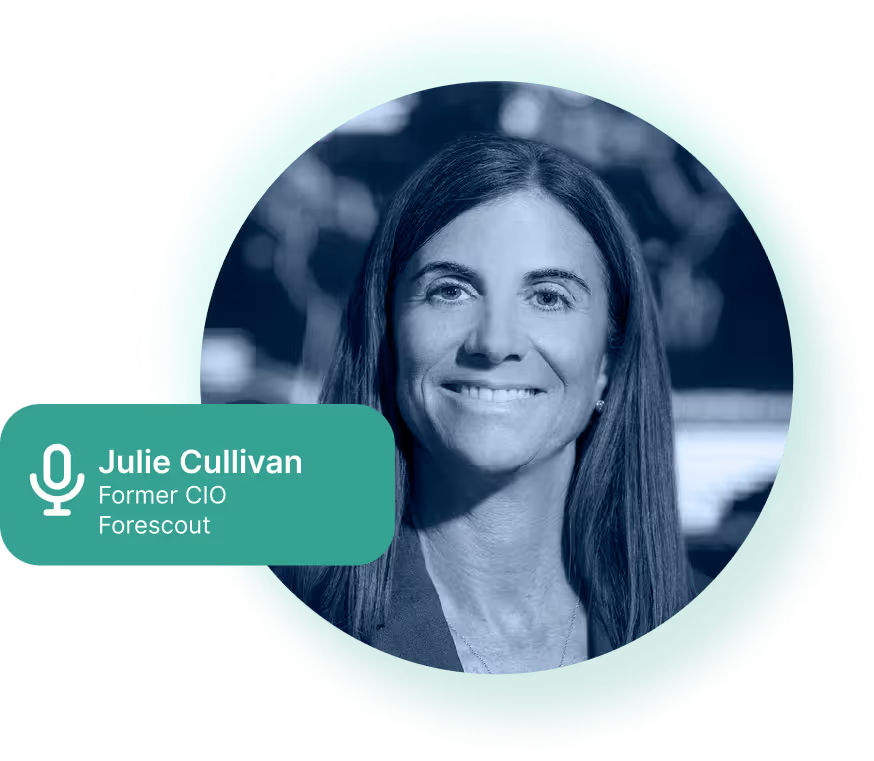
CIO Leadership Advice: Lessons from Sales and Go-to-Market with Julie Cullivan, Former Forescout CIO
Julie (Board Director at Axon, HeartFlow, and AaDya) joins us to share how she handled leading both technology & people at Forescout, why she took the leap to become a first-time CIO at FireEye, what she learned from her go-to-market roles at McAfee & Autodesk, and more.
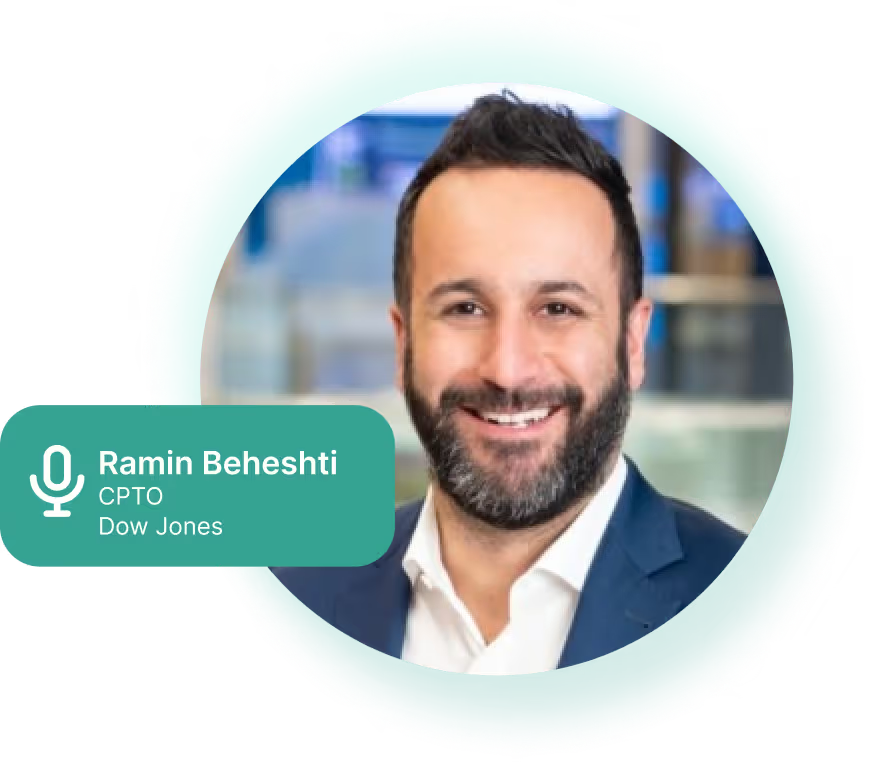
CIO to CPTO Transition: Shaping Product Culture and Curiosity with Ramin Beheshti, CPTO at Dow Jones
Ramin is the Chief Product & Technology Officer at Dow Jones, publisher of The Wall Street Journal, Barrons, Marketwatch, and more. He talks leadership lessons, the value of curiosity, his approach to working with startups, and more.
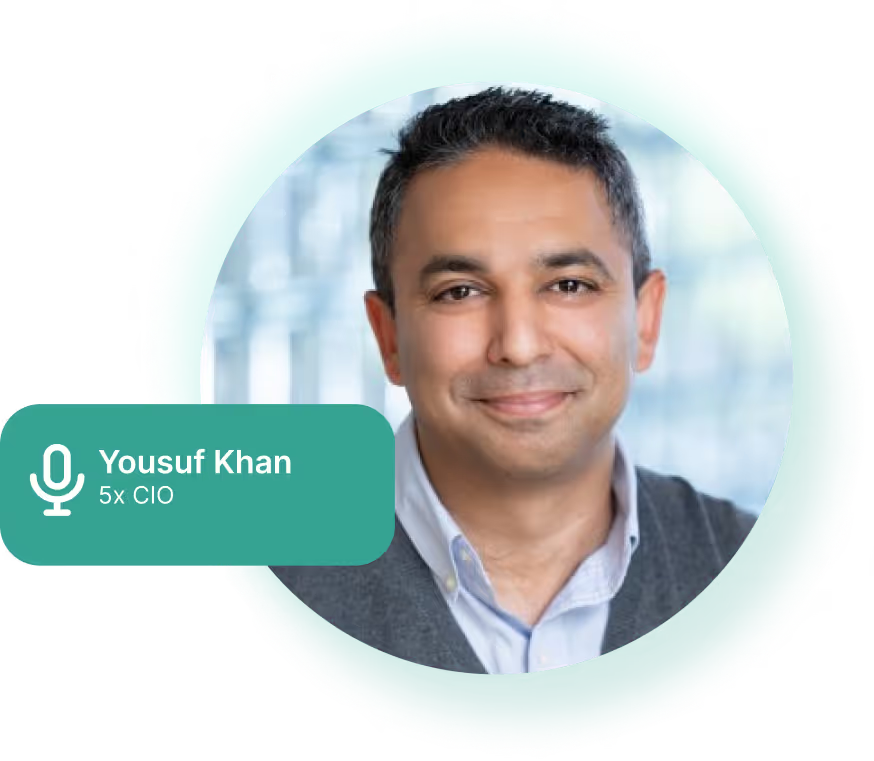
CIO to VC: Evaluating Startup Tech and Early-Stage Bets with Yousuf Khan, Former 5x CIO
Our first guest is Yousuf Khan, who discusses what he learned on his journey from accidental CIO at companies like Automation Anywhere, Moveworks, and Pure Storage to unconventional VC at Ridge Ventures.