Shadow IT vs. Innovation: Lessons from a Cybersecurity CIO with Brad Pollard, CIO at Tenable
Brad thrived in the punk-rock atmosphere of startups. Check out the full interview to hear some of the highlights (and struggles) from his exciting career.

Brad Pollard
Tenable CIO
Shadow IT vs. Innovation: Lessons from a Cybersecurity CIO with Brad Pollard, CIO at Tenable
Brad thrived in the punk-rock atmosphere of startups. Check out the full interview to hear some of the highlights (and struggles) from his exciting career.
1:06 Punk rock & startups
6:41 Innovation vs. Shadow IT
9:46 The time Brad was the source of a DNS attack
11:09 Advice from Tom Ashoff
13:23 Interviewing with Martin Roesch
15:46 Startup culture: 90’s vs. now
20:51 Advice from Larry Abernathy & John Burris
“When you have a binary approach to IT and someone says, “I want to do X, Y, Z,” and you say, “no” – all that does is inspire shadow IT.”
Brad Pollard
Tenable CIO
Brad Pollard on Punk Rock Startups, the Art of Saying Yes, and the Mentors Who Shaped a Career
Brad Pollard, CIO, Tenable | Interviewed by Luke Alie of Atolio
Brad Pollard is the CIO of Tenable, a publicly traded cybersecurity company. He describes his path as going from punk rock musician trying to get his band a website in 1995 to an IT career spanning small ISPs, Sourcefire (acquired by Cisco for 3 billion dollars), and Tenable, where he joined pre-IPO and helped grow the company from 400 to 1,500 people. He talks about startup culture, the art of saying yes to innovation instead of no, and the mentors who fundamentally changed how he worked and led.
From Punk Rock to IT: An Accidental Career That Stuck
Luke Alie (LA): Tell me a bit about your background and how you arrived at Tenable.
Brad Pollard (BP): I got into technology trying to be a musician in 1995. I was trying to get my band on the World Wide Web, which was a new thing, and started learning to build websites. I ended up working for a small ISP called ClarkNet, which was deaf-owned and based in a barn with sheep outside. I learned American Sign Language, Solaris, Cisco IOS, Perl. It was like going to college all over again for something entirely different. And I fell in love with startup culture because it reminded me of a punk rock band: no rules, building things that had never been built before, surrounded by really smart people.
From there I joined Sourcefire, an intrusion detection company, as around the 17th person hired. I stayed 12 years. By the time Cisco acquired us for three billion dollars, we were 1,500 people. Two years at Cisco, then I found Tenable. We were about 400 people when I joined, pre-IPO. Now we're publicly traded, have had three acquisitions, and are around 1,500 people globally.
Cowboys and Governance: How IT Can Enable Innovation Instead of Killing It
LA: You've worked in fast-moving startup cultures as a CIO. What are the drawbacks of that culture and how do you work with it?
BP: The thing that makes startup culture go can also be a problem. In any startup there is entrepreneurial spirit. As a governance function, I call that cowboys. And cowboys can cause problems. But the way you engage them is not to be binary about it. The answer is always yes, let's figure out how to make it work.
When you say no outright to a smart person who wants to try something, all you do is inspire shadow IT. They go do it anyway, and that doesn't scale. Instead, say yes and partner with them on building a solution. They get skin in the game. They help find budget. They talk through the rules. They see everything involved. And you get a much better work product as a result.
People perceive IT and governance bodies as red tape, as something that slows innovation rather than enables it. My job is to change that perception by saying: let's do a pilot. Let's have InfoSec review it. Let's do it through single sign-on. Let's put enough guardrails on it that you're not accidentally spinning up an AWS bucket with a wide-open network and copying data into it. I want innovators out there working with a net, not without one. That's not restriction. That's protection.
Identifying Good Startup Bones
LA: You've mentioned the 'good bones' of a startup. What does that mean to you?
BP: First: does technology leadership actually believe in what they are building? Do they think it solves a real problem and why? That passion is easy to detect. Second: what's the energy in the office or on video calls? Do people seem excited to be there? Are they proud to work at this company? All of that traces back to founders. If leadership is not excited, individual contributors will not be either.
I have seen startups whose entire culture was organized around an exit. They were asking about how to get out before they had fully committed to building something worth getting out of. I knew what good bones looked like because I had seen it twice. ClarkNet DNA and Sourcefire DNA. Those were organizations built by people who genuinely wanted to do something, build something well, and make working fun. When you're in that environment it's inspiring and it makes every hard day worth it.
Two Mentors Who Changed the Course of a Career
LA: What role has mentorship played in your career?
BP: Larry Abernathy at Sourcefire changed me. I was 27 or 28, convinced I was very smart, and writing long emails to explain to people why they were wrong. Larry sat me down and said: we all know you're smart, nobody cares, just get stuff done. I had never really looked at myself from the outside like that. Within a year of that conversation I went from being someone no one wanted to work with to being a director. Five years later I was a VP. That redirection changed everything about how I worked with people.
John Burris, the second CEO of Sourcefire, was the other. He would pull me into his office and rubber-duck problems with me. One day he stopped and said: the person with the least words has the most power. After that I paid intense attention to him in meetings. He'd sit through long discussions and then just say yes or no, one word, and the room would settle. During a board meeting I tried it. The chairman was asking me questions. I said yes and sat back. John was sitting next to me. He made a big smile and put two M&Ms in my hand, then took one back and said: one M&M is good, not two. That's the kind of mentorship you can't pay for.
LA: Brad, thank you so much for talking with me today.
BP: When I met you guys I really liked your vibe. Having a conversation like this reminds me how much I've genuinely enjoyed this career. Watching founders' dreams come true and being part of companies like these has been a lot of fun.
Latest Episodes
Green Computing and Data Unlocking: Mentorship for Tech Leaders with Andrea Gallego, Global CTO at BCG GAMMA
Andrea Gallego (Global CTO at BCG GAMMA) has taken her career from large financial institutions, to rapidly growing NGOs, and ultimately to this intersection of consulting and tech. Listen in to hear her thoughts on the value of mentorships between women, how she became interested in startup culture, possible new ways to leverage information at consulting groups, and more.
Internal Knowledge Management: Experimentation While Scaling with Paolo Negri, Co-founder at Contentful
Paolo walks us through his early career at startups across Europe, how he built a company solving a problem he faced at those very startups, why he encourages a culture based on experimentation at Contentful, and much more.
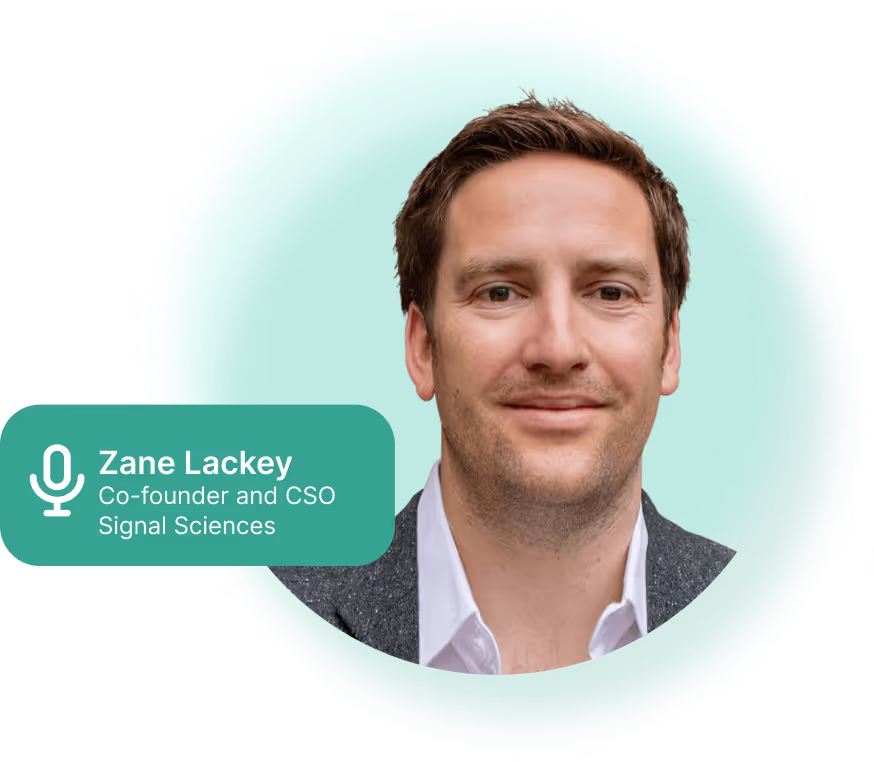
Securing Digital Transformation: Practical Lessons from Signal Sciences with Zane Lackey, Co-founder at Signal Sciences
Zane is a Co-founder and Chief Security Officer at Signal Sciences, a web-application security company acquired by Fastly. Zane shares what his career has taught him about security, founding teams, and what the future holds for digital transformations.
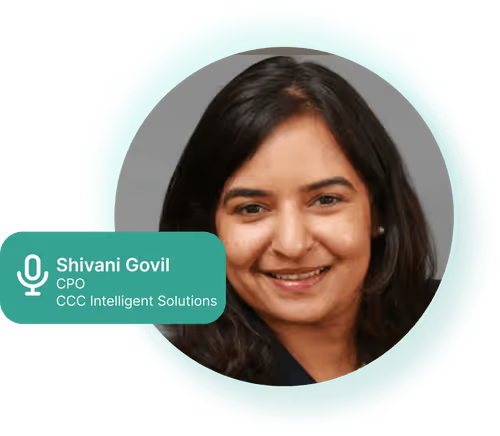
Innovation Culture: Enterprise vs. Startup Technology Scaling with Shivani Govil, CPO at CCC Intelligent Solutions
Innovation has been a central focus in Shivani Govil's career, including during her time at Silicon Valley Startups, SAP, and in her current role as Chief Product Officer at CCC Intelligent Solutions, a modern insurance solutions company. We dove into how she thinks innovation works at different scales, business units, industries, and more.
Startup to Enterprise Ops: Lessons for Serial Entrepreneurs with Greg Tacchetti, CIO at State Auto Insurance
Atolio's co-founder Mark Matta interviews Greg Tacchetti, CIO at State Auto Insurance. Greg shares his story, what he learned from his previous experience as a co-founder, which tech he's most excited about these days, and more.

SaaS Sprawl and Transparency: Scaling Internal Employee Directories with Alex Solomon, CTO and Co-founder at PagerDuty
Alex Solomon (CTO & Co-founder at PagerDuty) joins us to talk about the early days at PD and some critical decisions about transparency, documentation, employee experience, and more.
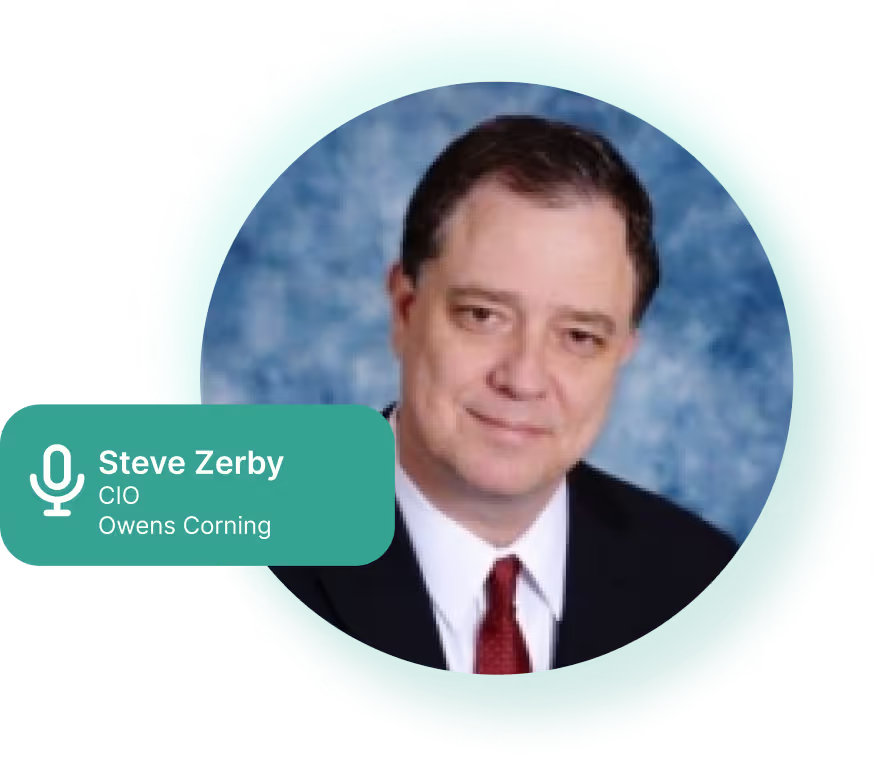
Engineering Transparency: Building a Culture of Urgency (Without Panic) with Steve Zerby, CIO at Owens Corning
Fortune 500 CIO Steve Zerby talks with us about the culture of urgency that he is helping foster at Owens Corning and how it relates to ego, transparency, service, and more.
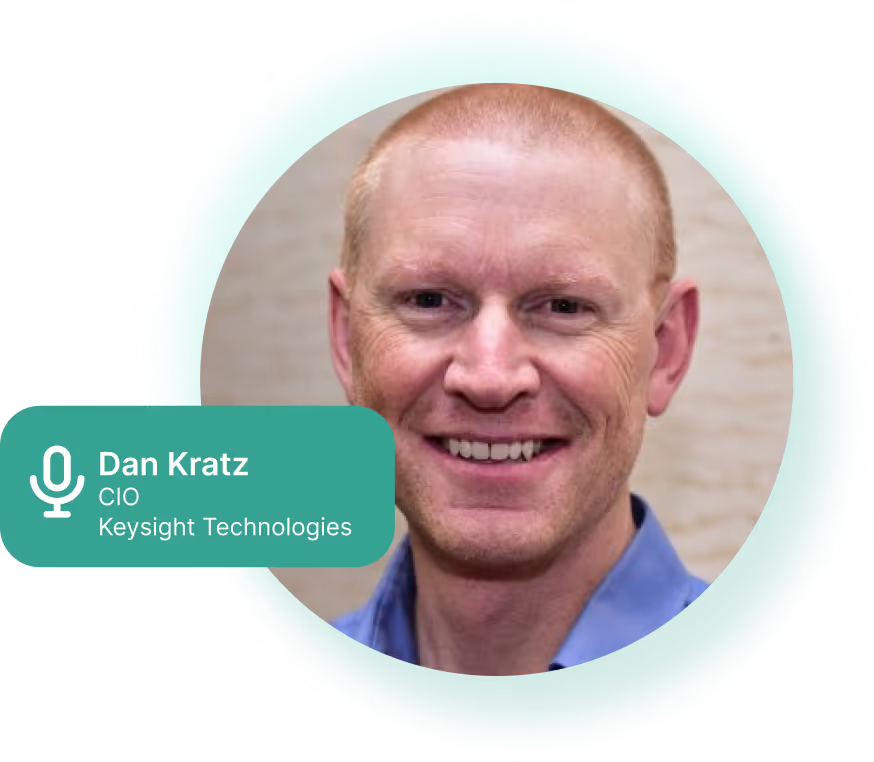

Purposeful Innovation: Avoiding Single-Vendor Lock-in Risk with Andrew Campbell, CIO at Terex Corporation
Andrew talks with us about a number of topics, including the concept of purposeful innovation at Terex, the drawbacks to single-vendor environments, his reasons for being a servant leader, and more.
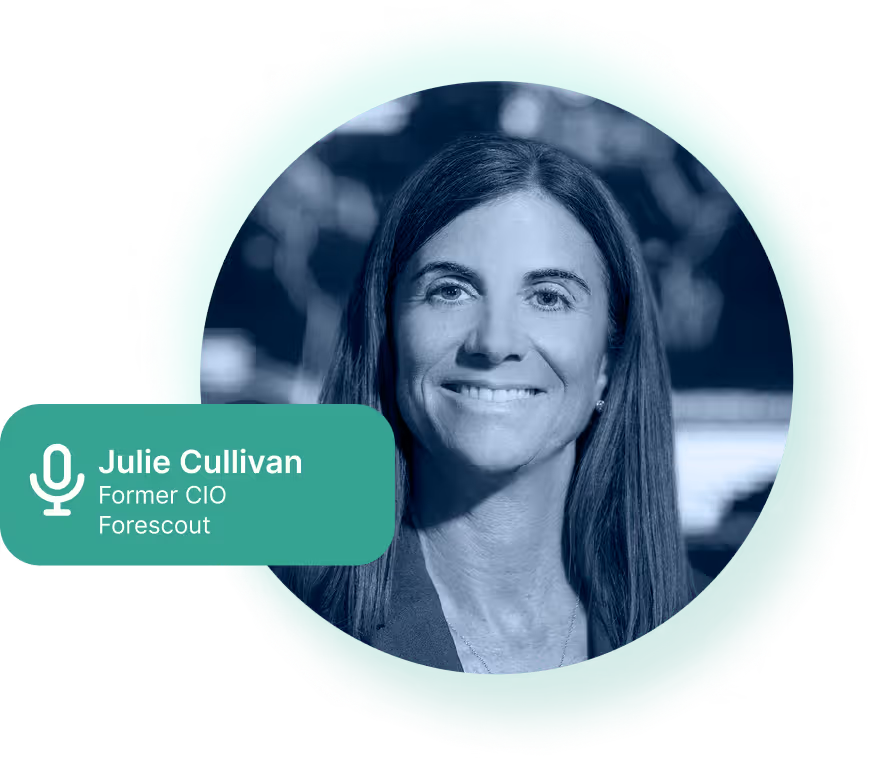
CIO Leadership Advice: Lessons from Sales and Go-to-Market with Julie Cullivan, Former Forescout CIO
Julie (Board Director at Axon, HeartFlow, and AaDya) joins us to share how she handled leading both technology & people at Forescout, why she took the leap to become a first-time CIO at FireEye, what she learned from her go-to-market roles at McAfee & Autodesk, and more.
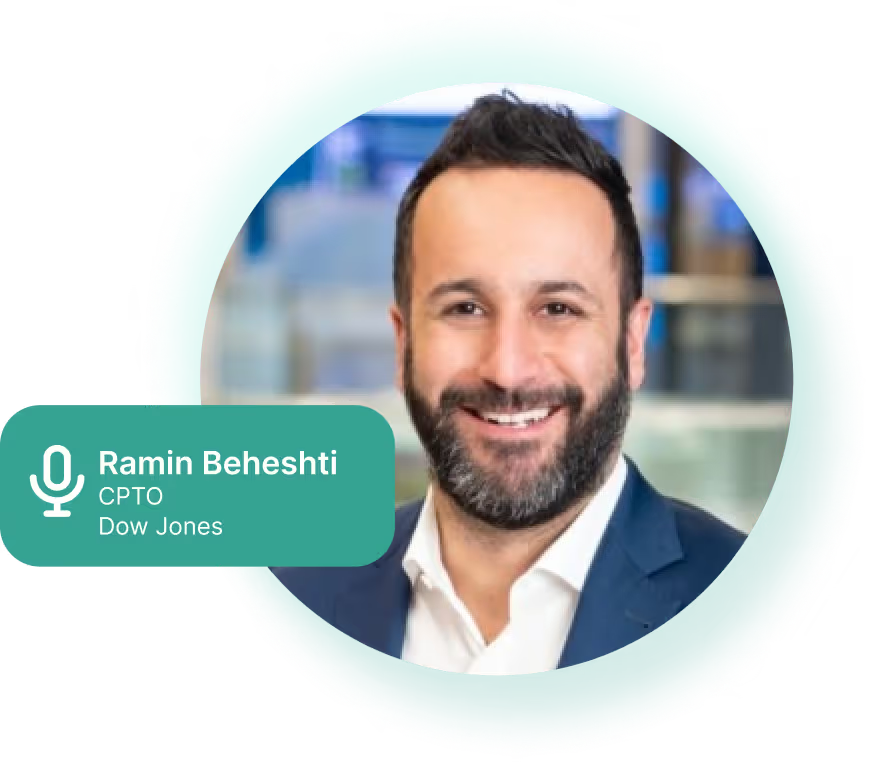
CIO to CPTO Transition: Shaping Product Culture and Curiosity with Ramin Beheshti, CPTO at Dow Jones
Ramin is the Chief Product & Technology Officer at Dow Jones, publisher of The Wall Street Journal, Barrons, Marketwatch, and more. He talks leadership lessons, the value of curiosity, his approach to working with startups, and more.
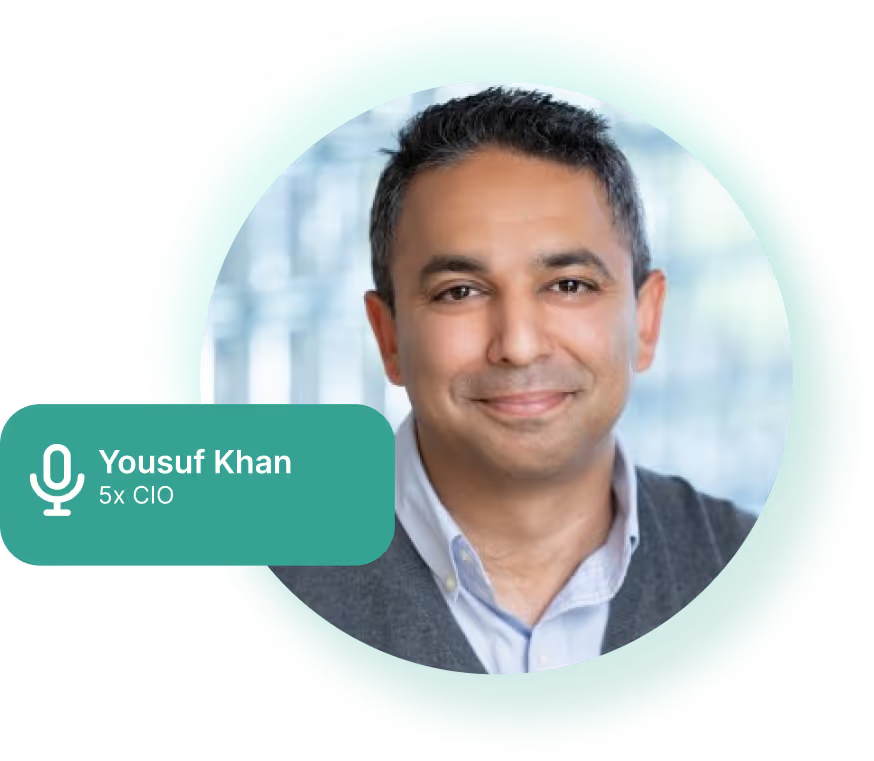
CIO to VC: Evaluating Startup Tech and Early-Stage Bets with Yousuf Khan, Former 5x CIO
Our first guest is Yousuf Khan, who discusses what he learned on his journey from accidental CIO at companies like Automation Anywhere, Moveworks, and Pure Storage to unconventional VC at Ridge Ventures.