
Atolio for IBM Bob
IBM Bob, now with your company context powering every line of code
Bob knows your code. Atolio adds the standards, tickets, incidents and decisions around it, scoped to each developer, from inside your environment.
Atolio for IBM Bob
Bob knows your code. Atolio adds the standards, tickets, incidents and decisions around it, scoped to each developer, from inside your environment.
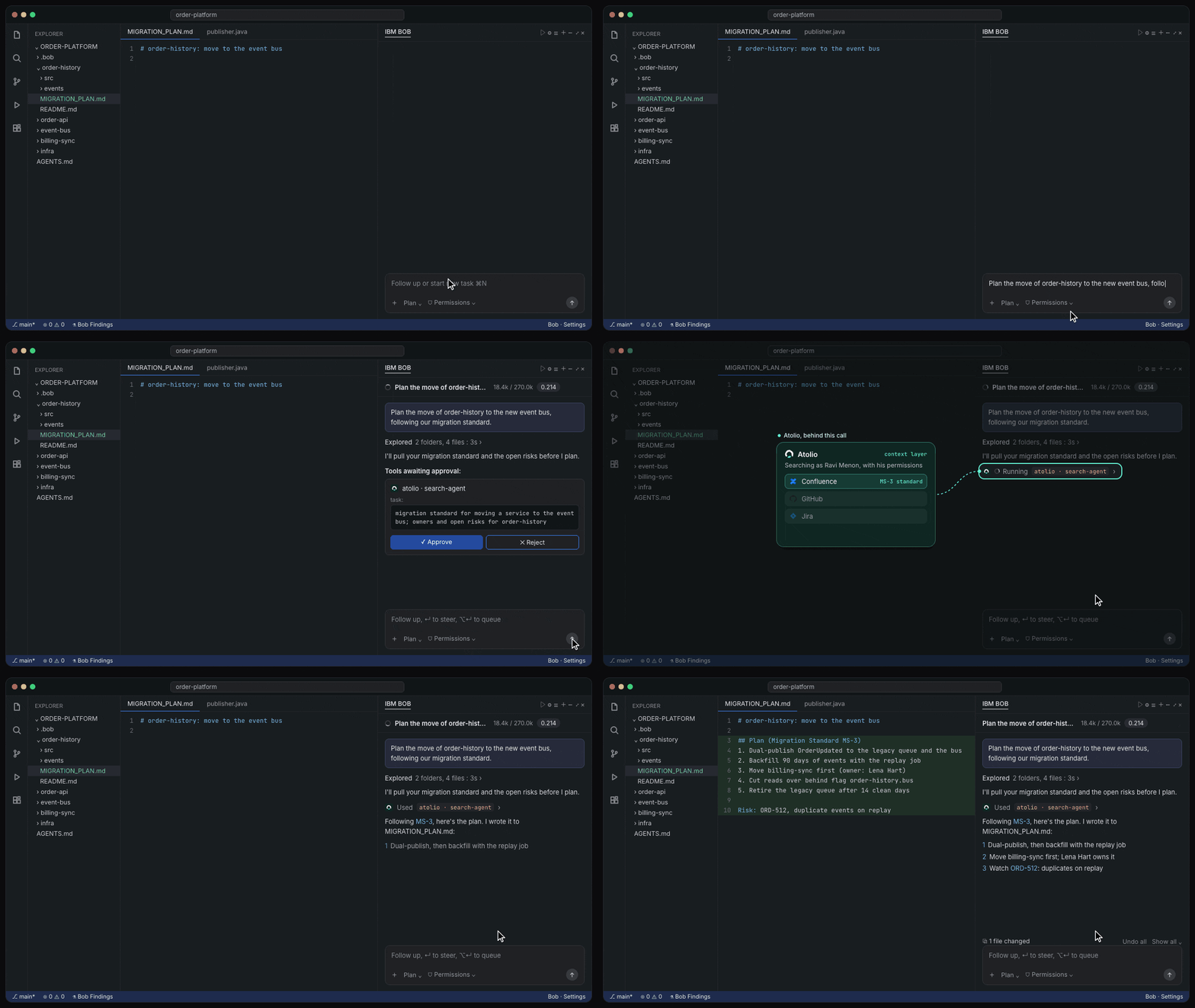

Atolio in IBM Bob
Bob reads your standards, tickets and team decisions, not just the code.
One call returns ranked, scoped context, so Bob skips searching each system in turn. This uses up to 80% fewer tokens.
Permissions sync continuously from your source systems and are checked on every query.
Atolio runs in your cloud or on-prem, including on IBM Fusion, so context stays inside your perimeter.
Trusted by teams across leading enterprises


Add Atolio’s endpoint to IBM Bob and sign in with your identity provider. Your admins choose who can connect.
Signed in as each user
Off until you approve it
What Bob receives
Inside your environment · cloud or on-prem
Signed in as each user
Every request runs as the user asking, so Bob sees only what they can see.
IBM Bob
Works in
IBM Bob IDE
Bob Shell
Agents built with IBM watsonx Orchestrate
Plan
Plan the move of order-history to the new event bus, following our migration standard.
Ask
Who owns the pricing rules engine, and what changed last quarter?
watsonx Orchestrate
Check every new service against our security baseline.
Plan the move of order-history to the new event bus, following our migration standard.
Atolio, behind this call

Atolio

Confluence

Jira

GitHub
GitHub
Jira

Slack
Confluence
GitHub

ServiceNow
IBM Bob
The standard, the dependency map and open tickets, before Bob writes a plan.
Confluence
Jira
GitHub
Owners, recent changes and the decisions behind them, cited.
GitHub
Jira
Slack
An agent scoped to security standards and repositories, with every call logged.
Confluence
GitHub
ServiceNow
The same index, permissions and logs work across every assistant and agent your team uses.

Atolio for Claude
Claude, grounded in everything your company knows
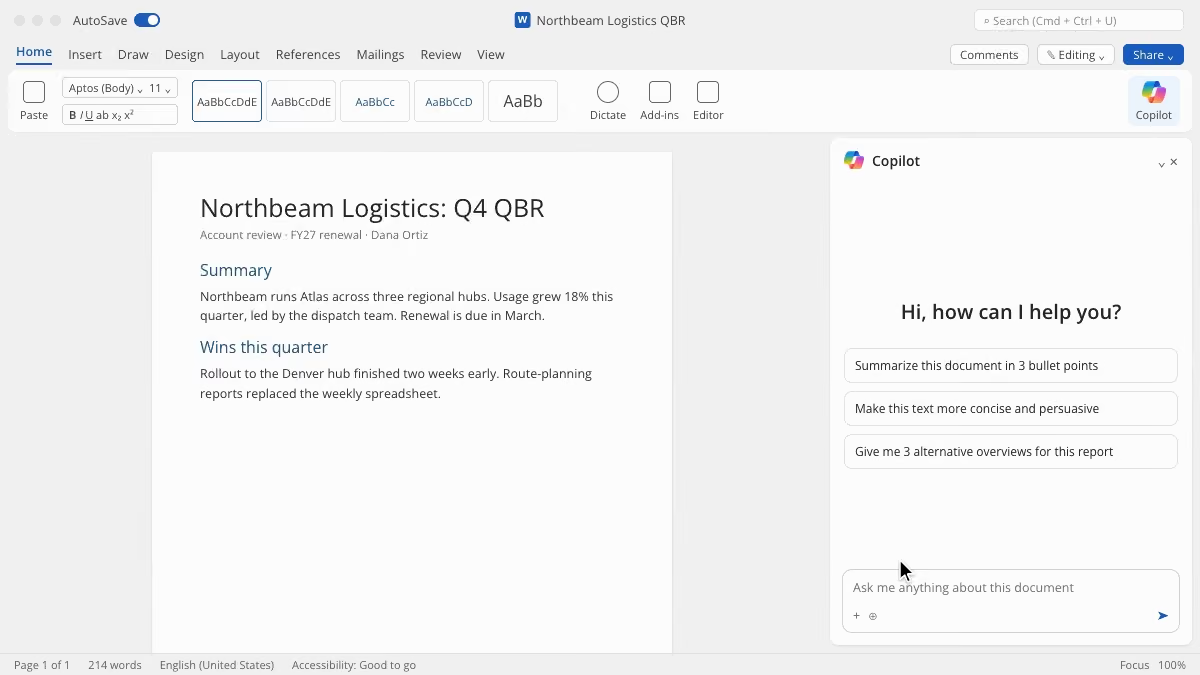

Atolio for Microsoft 365 Copilot
Microsoft 365 Copilot, grounded in every system you run

Atolio for ChatGPT
ChatGPT, grounded in everything your company knows
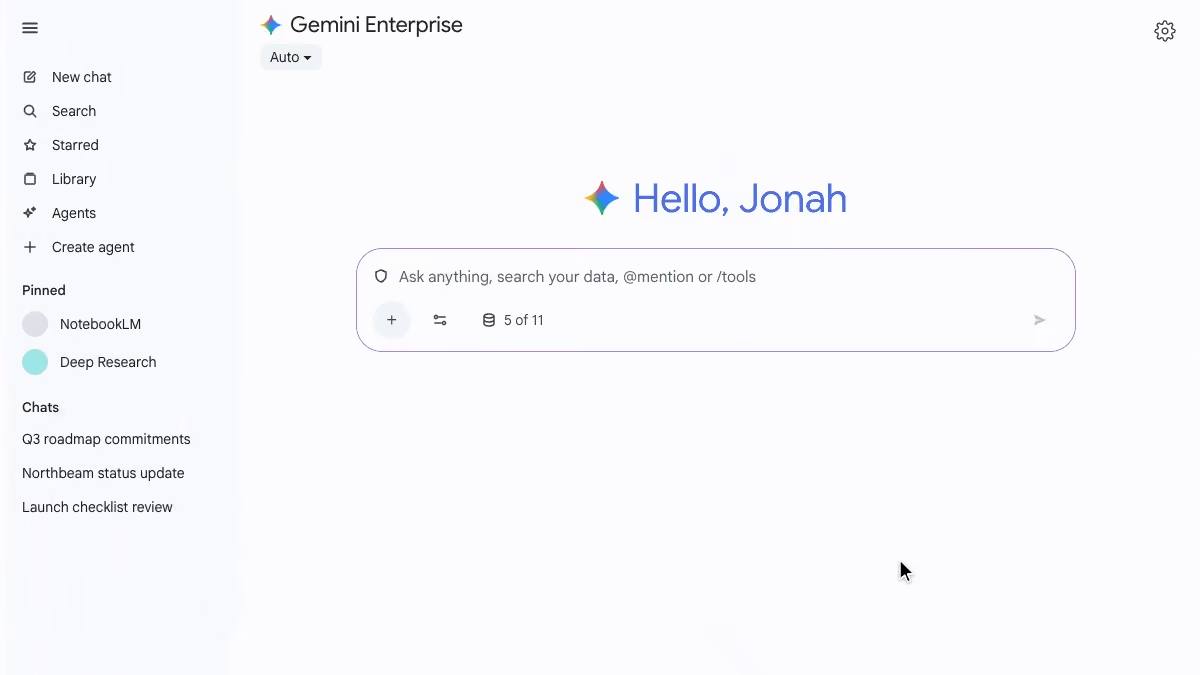

Atolio for Gemini Enterprise
Gemini Enterprise, grounded in every system you run
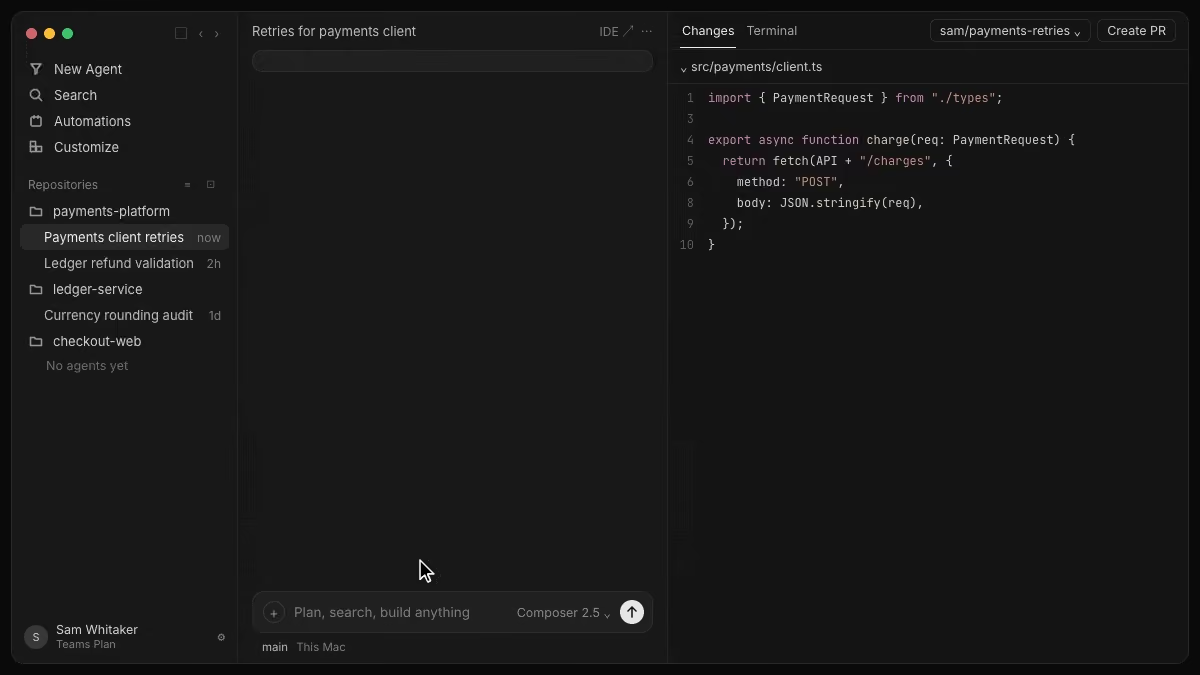

Atolio for Cursor
Cursor, now with your company context powering every line of code
FAQs
You connect Atolio to IBM Bob by adding Atolio’s Model Context Protocol (MCP) endpoint as a remote MCP server.
A developer or platform team adds the endpoint once, for a project or for everyone. The first time each developer uses it, Bob opens a sign-in to Atolio through your single sign-on (SSO), and every request after that runs as that developer.
Access is off by default on the Atolio side. Your Atolio admins approve which tools can connect and which people can use them, so one team can start first.
The same endpoint works in Bob’s Agent, Ask and Plan modes, in Bob Shell and in agents built with IBM watsonx Orchestrate. Developers can choose which Atolio tools Bob runs without asking.
IBM updates Bob often, so we keep step-by-step instructions in the Atolio setup guide rather than on this page.
Turning a tool or a developer off in Atolio takes effect on their next request, so pausing a rollout is a single change.
Yes, Atolio runs on IBM Fusion, as well as in your own cloud account or on other on-prem Kubernetes.
IBM and Atolio partner to deliver a sovereign context layer on IBM Fusion. Atolio’s index, permissions and logs run on infrastructure you control, so no data leaves your perimeter.
That pairs well with Bob for organizations with strict data residency or air-gapped requirements. Bob gets context from every system your developers rely on, and the index behind it stays in your data center.
On IBM Fusion, Atolio can also use models you host yourself, so the whole stack stays inside your perimeter.
If you already run Fusion, Atolio deploys alongside your existing workloads. Our team and IBM’s can scope the deployment together.
Atolio also runs in AWS, Azure and Google Cloud, or on other on-prem Kubernetes with or without OpenShift, so you can start in one place and move later. Wherever it runs, your Atolio admins decide which AI tools, including Bob, can connect and which people can use them.
Atolio keeps your index in your environment, and Bob receives only the context Atolio returns for each request.
Atolio runs in your own cloud account or on-prem, under your keys. Your documents, tickets, messages and their permissions stay there.
When Bob asks Atolio a question, Atolio finds the passages that developer can see, ranks them and returns a short, cited answer. That response joins Bob’s context and is handled under your agreement with IBM, like the rest of the session.
For the strictest environments, Atolio runs on IBM Fusion or other on-prem Kubernetes, air-gapped if needed, so the index never touches a public cloud.
Every call is logged in Atolio with the developer, the tool and the sources used, so your security team can see what reached Bob.
Your security team can review that log at any time, and it stays in your environment with everything else. Nothing about how Bob handles your code changes when Atolio is added.
Bob sees only what the developer using it is allowed to see in each connected system.
Atolio indexes content together with its permissions. Permissions sync continuously from your source systems and are checked on every query, so a change in Jira or Confluence carries through in near real time.
Each request carries the signed-in developer’s identity. Atolio filters results to that user before ranking, so restricted material never reaches Bob.
For agents built with IBM watsonx Orchestrate, admins can add a Knowledge Scope that limits an agent to the sources and projects it needs. A security-review agent can read standards and repositories without seeing HR or finance.
Every call is logged, including the agent that made it and the sources it used.
If a developer loses access to a project or a channel, the agent loses it too, without anyone updating a config file. That keeps the agent’s view in line with what the developer could open themselves.
Yes, one Atolio deployment serves Bob and every other AI tool your teams use, at the same time.
Atolio’s endpoint follows the open Model Context Protocol (MCP) standard. Cursor, Claude Code, GitHub Copilot, Codex and Gemini CLI connect the same way Bob does, and each reads the same permission-aware index.
Large engineering organizations often run more than one coding tool. With Atolio, the context behind your code is consistent whichever tool a developer opens, and your platform team maintains one integration instead of one per tool.
The same index serves assistants outside engineering, such as Microsoft 365 Copilot, Claude and ChatGPT, so everyone works from the same governed source.
Atolio shows usage and token spend by tool, team and agent, which helps you compare tools on real work.
Each tool still runs under its own vendor agreement, while Atolio applies the same permissions and logging to all of them. One deployment, one security review and one audit log cover every assistant your teams use, now and later.


